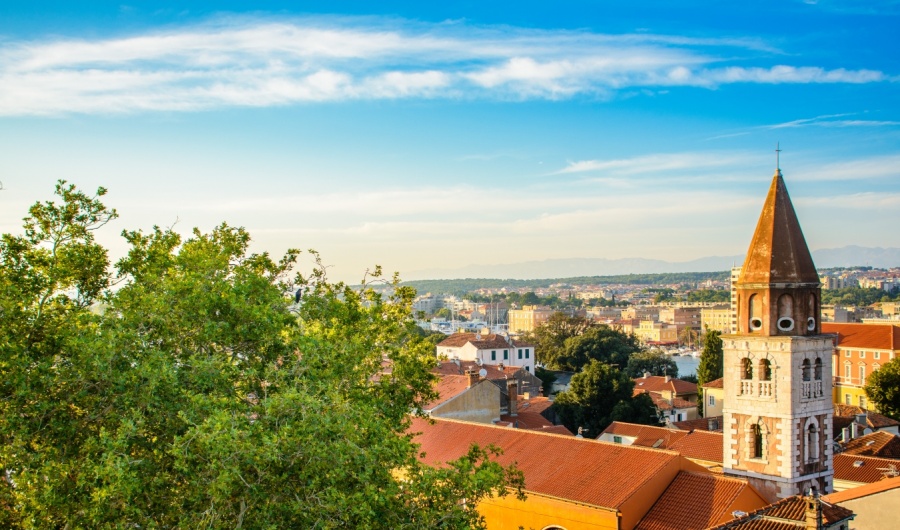

People's Square, known as Pjaca, is a city square in Split that came about through the urban expansion of the city west of the Iron Gate of Diocletian's Palace. This moved the city's main square from east to west, leaving the Peristyle with the function of the cathedral square (Piazza del Duomo), that is, the city's main sacred square.
The square's appearance is impressive, as is its rich history. Below we will describe the Split square in a little more detail, its appearance and the rich history of its existence.
As early as the 13th century a need arose to shape a city centre. The medieval town expanded beyond Diocletian's Palace, towards the west, so that the urban space simply „called for“ the shaping of a new city centre. The new main city square was formed on the site where a pre-Romanesque chapel of St Lawrence once stood, which is why it was named St Lawrence Square (Platea Sancti Laurentii).
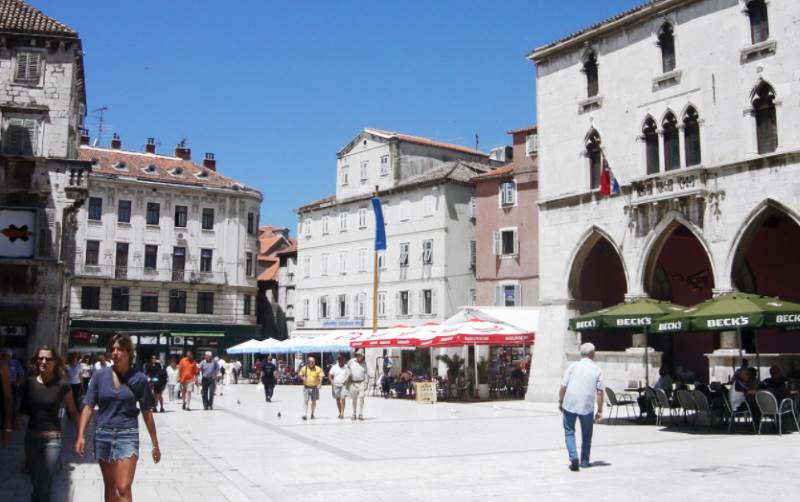 This square, under that name, is first mentioned in 1225. It was surrounded by representative buildings, among which we can highlight the Prince's Court with the Communal Palace and town hall, as well as the municipal theatre with a dungeon.
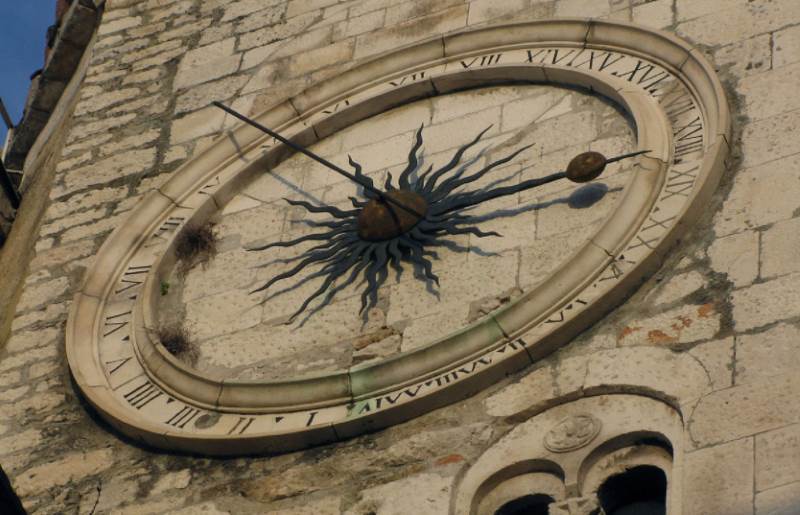
Next to the Town Hall building stands the Renaissance Karepić Palace from the 16th century, which is connected to the town hall by beautiful late-Gothic double windows. The aforementioned urban complex stood on the north side of the square, while the east side was lined with a complex of palaces with a Romanesque tower, onto which a clock was added in the 15th century, and a Renaissance loggia of the town guard, rebuilt during the Baroque period. On the opposite side of the Iron Gate stands the late-Romanesque palace of the Korčula count Ćubrijan Žaninić (Ciprian de Ciprianis), with picturesque corner hexafora windows on the upper floor and a statue of St Anthony the Hermit from 1394. On the west side, the square is rounded off into a unified whole by the Nakić House, built in the Viennese Art Nouveau style, while to the south the square is bordered by the building of today's Gradska kavana (City Café), a hotel building and the Pavlović Palace.
See: Gregory of Nin in Split
At one time the city square also had a stone flag pole (štandarac), with the city's coat of arms and the lion of St Mark at its base, as symbols of the city and of supreme authority. The pole stood in front of the open loggia of the Communal Palace, while today's pole stands somewhat further west. The square (then still St Lawrence Square) was paved in parts on several occasions, and was only fully paved in 1749.
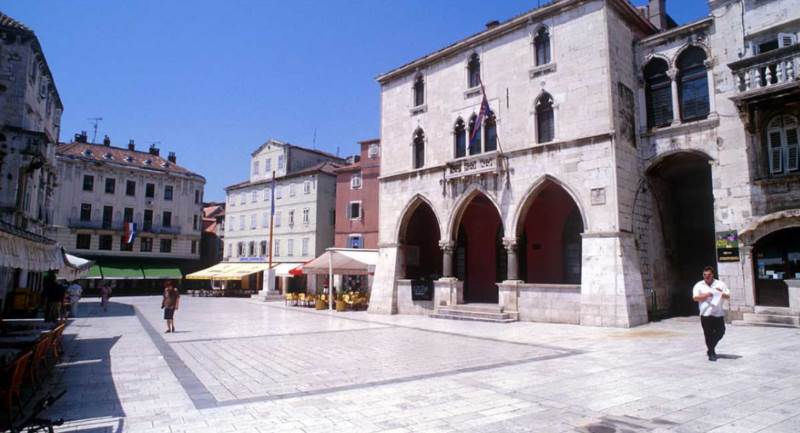 After its original name, St Lawrence Square, it was later called Weapons Square, after the Town Guard building on it. Later it was renamed again to Gentlemen's Square (Piazza dei Signori), and finally to People's Square.
In 1821 the city authorities demolished a large part of the late-Gothic urban complex from the 15th century, including the Prince's Court, and so the square took on the form we all enjoy today. The square is home to Split's oldest bookshop, open since 1861, once owned by the Morpurgo family, after whom it is still named today. Be sure to visit this square in Split, enjoy a stroll and a pleasant view, while learning about the history of this city. People's Square is a favourite gathering place for many of Split's residents, and tourists too like to come here and get to know the city in a different, more „personal“ way.
The old town hall
The Romanesque tower with bell and clock
The Cipriano Palace
The Karepić Palace
The Pavlović Palace
The Cambi Palace
The Nakić House
The town loggia
In the late 13th and early 14th centuries Split developed rapidly, and all this was reflected in the city's urban appearance. During this period the city grew beyond the former bounds of Diocletian's Palace. Split gained its first suburbs; the most significant during this period was the western suburb, which received new walls and created the conditions for further development.
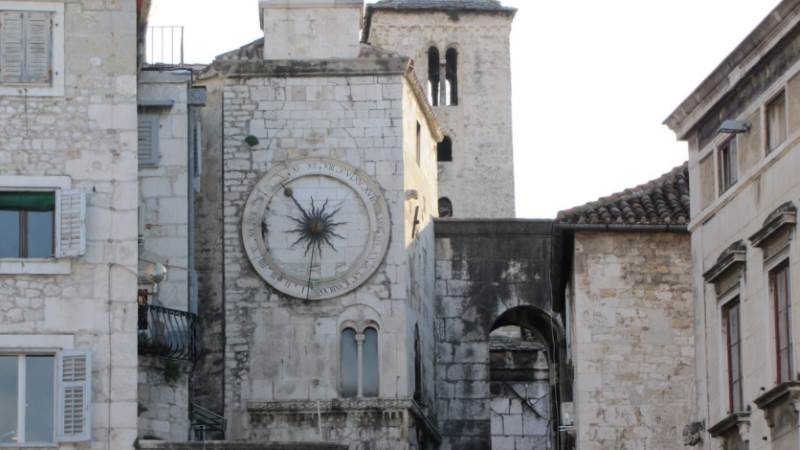 It was precisely in this area that a square was formed, first mentioned by name in 1255. In the 15th century the Venetians built the Prince's Court and the Municipal Town Hall there. This made St Lawrence Square the new city centre, while the Peristyle became the religious centre, dominated by the magnificent Cathedral of St Domnius. This layout was typical of European cities of the period. Although the square's official name is St Lawrence Square, the people of Split most often simply call it Pjaca.
This nickname suits it perfectly, for over the centuries it was something like a shared living room for all the citizens of Split. Today the Riva has taken over that role, but Pjaca can still be lively, and the nickname still suits it well today.
Pjaca was first mentioned in the 13th century as the Širina (open space) of St Lawrence, and is the first settled part of Split outside Diocletian's Palace. Today this square is a popular place enjoyed by the citizens of Split, as well as by many tourists who visit this city. It is no wonder that there is such great interest in this square, especially if we consider the large number of old buildings surrounding it.
We have already mentioned some of these buildings in the text above, but many others can also be found near the square. The tourist offer for sightseeing here is varied and very rich. Lovers of history, art and culture will certainly enjoy themselves.
Besides this, on the square you can enjoy one of the nearby cafés and restaurants, take a photo of this beautiful city, or simply spend the evening hours in a pleasant stroll around the square.
For centuries Pjaca has been the central stage of city life, and in more recent times it has become a recognised tourist destination enjoyed by many, wherever they come from. It is a place where time will fly by, and where you will certainly enjoy the city's dynamic stage. Split is a city of rich history, and Pjaca is just one part of all that. We hope that you, too, will come, spend unforgettable moments on Pjaca, and tell stories back home about Split's beautiful square.
Nearby venues: "GAGA", caffe bar, Konoba Pjaca Split, mass split narodni trg, the Renaissance Karepić Palace, the city's first postbox Ivona ApartmentsSplitCapacity: 6 · To the sea: 50 mView offer
 Green paradise villaSplitCapacity: 4-11 · To the sea: 1 kmView offer
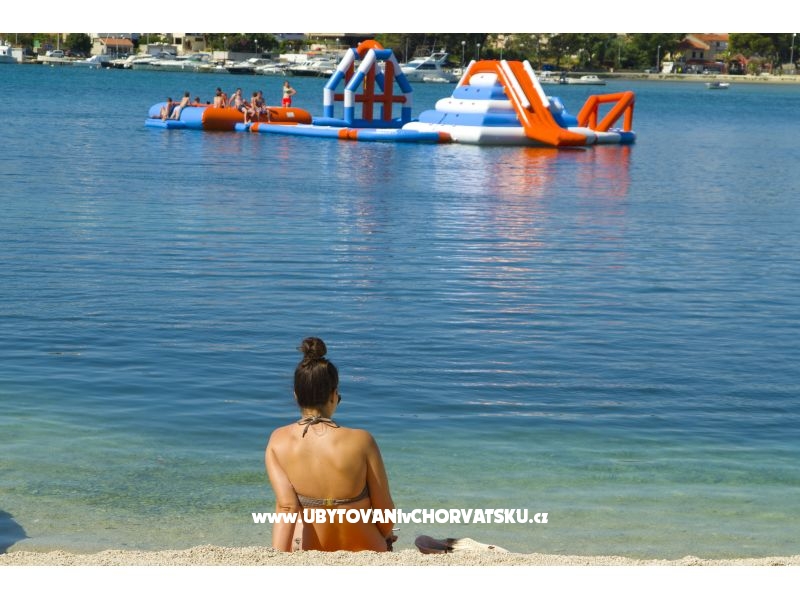 Apartman AnicaSplitCapacity: 4 · To the sea: 200 mfrom 20 € per person / nightView offer
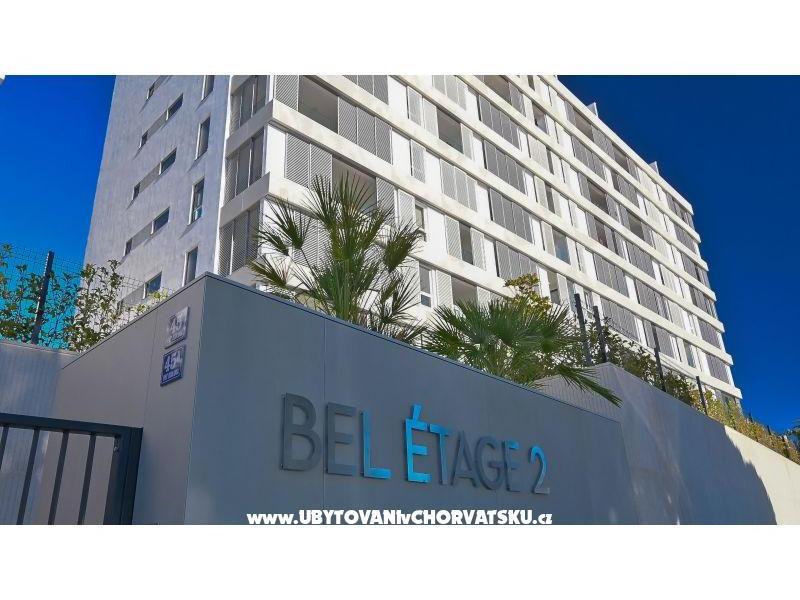 Split Green Eden & Blue HorizonSplitCapacity: 2-6 · To the sea: 200 mView offer
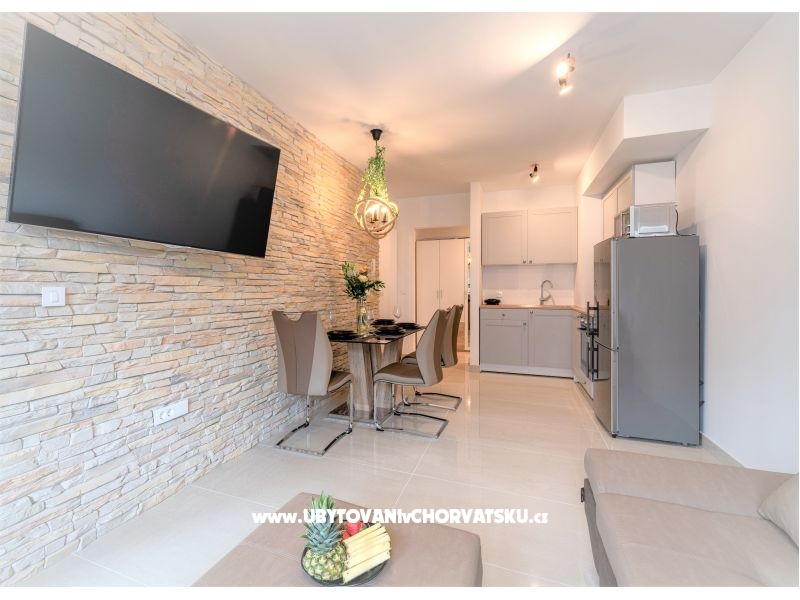 Luxury modern apartment on beachSplitCapacity: 2-4 · To the sea: 20 mfrom 8,50 € per person / nightView offer
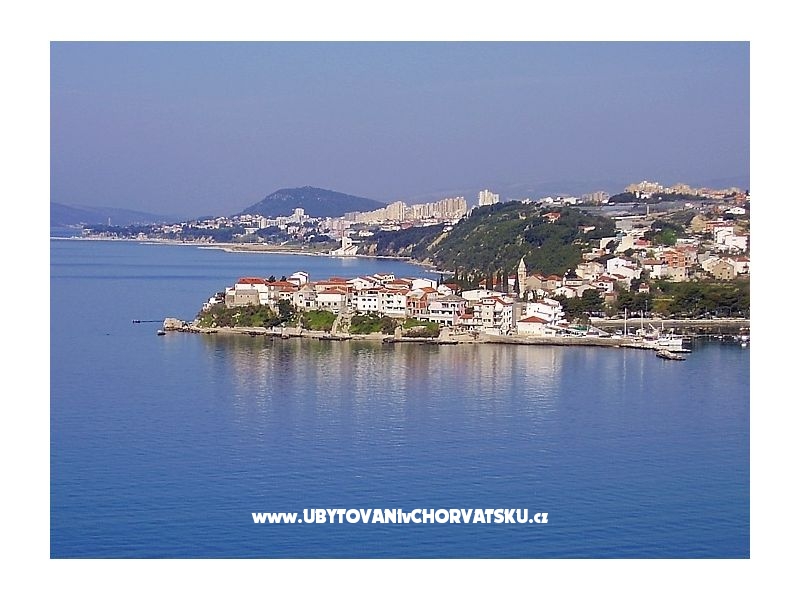 Apartman JagodaSplitCapacity: 2-4 · To the sea: 20 mfrom 25 € per person / nightView offer
As early as the 13th century a need arose to shape a city centre. The medieval town expanded beyond Diocletian's Palace, towards the west, so that the urban space simply „called for“ the shaping of a new city centre. The new main city square was formed on the site where a pre-Romanesque chapel of St Lawrence once stood, which is why it was named St Lawrence Square (Platea Sancti Laurentii).
This square, under that name, is first mentioned in 1225. It was surrounded by representative buildings, among which we can highlight the Prince's Court with the Communal Palace and town hall, as well as the municipal theatre with a dungeon.Next to the Town Hall building stands the Renaissance Karepić Palace from the 16th century, which is connected to the town hall by beautiful late-Gothic double windows. The aforementioned urban complex stood on the north side of the square, while the east side was lined with a complex of palaces with a Romanesque tower, onto which a clock was added in the 15th century, and a Renaissance loggia of the town guard, rebuilt during the Baroque period. On the opposite side of the Iron Gate stands the late-Romanesque palace of the Korčula count Ćubrijan Žaninić (Ciprian de Ciprianis), with picturesque corner hexafora windows on the upper floor and a statue of St Anthony the Hermit from 1394. On the west side, the square is rounded off into a unified whole by the Nakić House, built in the Viennese Art Nouveau style, while to the south the square is bordered by the building of today's Gradska kavana (City Café), a hotel building and the Pavlović Palace.
See: Gregory of Nin in Split
At one time the city square also had a stone flag pole (štandarac), with the city's coat of arms and the lion of St Mark at its base, as symbols of the city and of supreme authority. The pole stood in front of the open loggia of the Communal Palace, while today's pole stands somewhat further west. The square (then still St Lawrence Square) was paved in parts on several occasions, and was only fully paved in 1749.
After its original name, St Lawrence Square, it was later called Weapons Square, after the Town Guard building on it. Later it was renamed again to Gentlemen's Square (Piazza dei Signori), and finally to People's Square.In 1821 the city authorities demolished a large part of the late-Gothic urban complex from the 15th century, including the Prince's Court, and so the square took on the form we all enjoy today. The square is home to Split's oldest bookshop, open since 1861, once owned by the Morpurgo family, after whom it is still named today. Be sure to visit this square in Split, enjoy a stroll and a pleasant view, while learning about the history of this city. People's Square is a favourite gathering place for many of Split's residents, and tourists too like to come here and get to know the city in a different, more „personal“ way.
Buildings on the square worth seeing
The old town hall
The Romanesque tower with bell and clock
The Cipriano Palace
The Karepić Palace
The Pavlović Palace
The Cambi Palace
The Nakić House
The town loggia
A brief look at Pjaca Square in Split
In the late 13th and early 14th centuries Split developed rapidly, and all this was reflected in the city's urban appearance. During this period the city grew beyond the former bounds of Diocletian's Palace. Split gained its first suburbs; the most significant during this period was the western suburb, which received new walls and created the conditions for further development.
It was precisely in this area that a square was formed, first mentioned by name in 1255. In the 15th century the Venetians built the Prince's Court and the Municipal Town Hall there. This made St Lawrence Square the new city centre, while the Peristyle became the religious centre, dominated by the magnificent Cathedral of St Domnius. This layout was typical of European cities of the period. Although the square's official name is St Lawrence Square, the people of Split most often simply call it Pjaca.This nickname suits it perfectly, for over the centuries it was something like a shared living room for all the citizens of Split. Today the Riva has taken over that role, but Pjaca can still be lively, and the nickname still suits it well today.
Pjaca – St Lawrence Square and its tourist offer
Pjaca was first mentioned in the 13th century as the Širina (open space) of St Lawrence, and is the first settled part of Split outside Diocletian's Palace. Today this square is a popular place enjoyed by the citizens of Split, as well as by many tourists who visit this city. It is no wonder that there is such great interest in this square, especially if we consider the large number of old buildings surrounding it.
We have already mentioned some of these buildings in the text above, but many others can also be found near the square. The tourist offer for sightseeing here is varied and very rich. Lovers of history, art and culture will certainly enjoy themselves.
Besides this, on the square you can enjoy one of the nearby cafés and restaurants, take a photo of this beautiful city, or simply spend the evening hours in a pleasant stroll around the square.
For centuries Pjaca has been the central stage of city life, and in more recent times it has become a recognised tourist destination enjoyed by many, wherever they come from. It is a place where time will fly by, and where you will certainly enjoy the city's dynamic stage. Split is a city of rich history, and Pjaca is just one part of all that. We hope that you, too, will come, spend unforgettable moments on Pjaca, and tell stories back home about Split's beautiful square.
Nearby venues: "GAGA", caffe bar, Konoba Pjaca Split, mass split narodni trg, the Renaissance Karepić Palace, the city's first postbox
Private accommodation in Split – directly from the owners
All accommodation in Split →Ivona ApartmentsSplitCapacity: 6 · To the sea: 50 mView offerGreen paradise villaSplitCapacity: 4-11 · To the sea: 1 kmView offerApartman AnicaSplitCapacity: 4 · To the sea: 200 mfrom 20 € per person / nightView offerSplit Green Eden & Blue HorizonSplitCapacity: 2-6 · To the sea: 200 mView offerLuxury modern apartment on beachSplitCapacity: 2-4 · To the sea: 20 mfrom 8,50 € per person / nightView offerApartman JagodaSplitCapacity: 2-4 · To the sea: 20 mfrom 25 € per person / nightView offerFollow us on Facebook for more articles about Croatia. Share this article using the buttons on the right. Thank you!
Upgrade this article
Bio si na ovom mjestu? Podijeli s nama svoja iskustva ili fotografije.
Napiši svoju verziju članka. Nagrađujemo vlasnike apartmana.