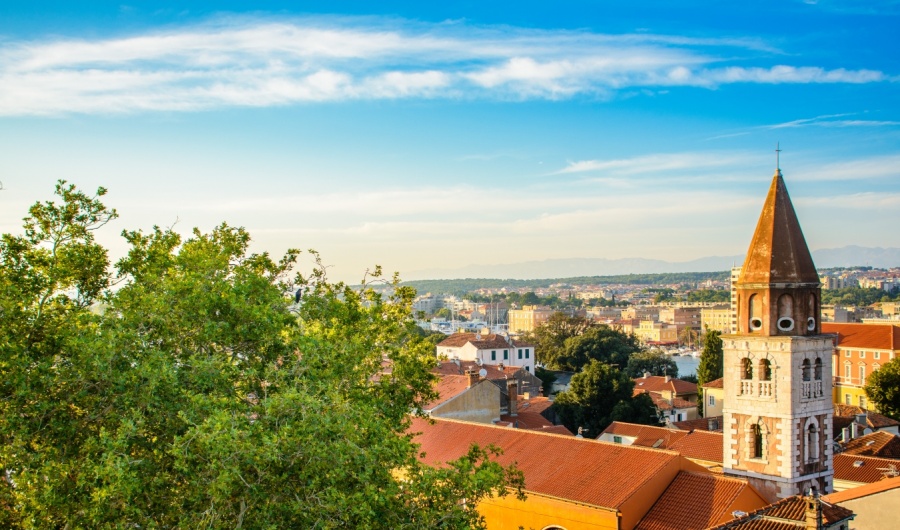

Trogir Cathedral is one of the most important monuments in Trogir, and it is included on the UNESCO list of protected World Heritage. On this building, styles from Romanesque to Baroque are evident, and it also houses valuable works of art. Of course, we mean the Cathedral of St Lawrence.
Construction of the cathedral began as far back as 1213, on the foundations of an early Christian cathedral destroyed by the Saracens in 1123. Just like its predecessor, this cathedral too is dedicated to St Lawrence, but it is also known as the cathedral of St John (the town's patron saint, who died in 1111), a bishop known for his blameless life and his resistance to the Hungarian king Koloman, who occupied Dalmatia and the whole of Croatia.
The Cathedral of St Lawrence was mostly built in the Romanesque style (by the masters Stjepan and Matej) by 1251, while the Gothic vault was built in the 15th century.
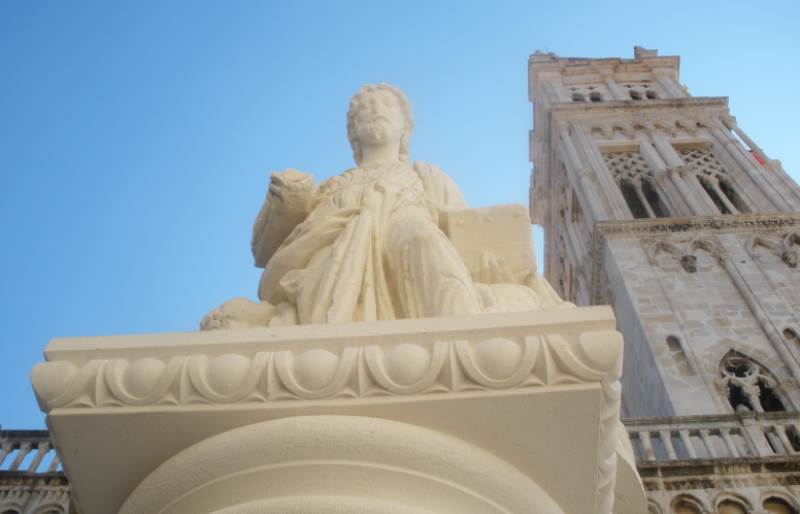 Construction was completed in 1589 with the finishing of the top storey of the bell tower in the Mannerist style, the work of the architect Trifun Bokanić (1575–1609), whose construction lasted almost two centuries. The first storey, the work of Matija Gojković, was built in the Gothic style (after the Venetians destroyed it in 1420); the second bears the hallmark of the Venetian floral Gothic of the 15th century (with windows reminiscent of the windows of the Ca' d'Oro).
In 1460, Andrija Aleši was given the task of adding a baptistery alongside the vaulted vestibule of the Cathedral of St Lawrence. At the same time as the construction of the baptistery began, Aleši also worked on remodelling the cathedral sacristy. Construction of the baptistery lasted until 1467. In 1468, Andrija Aleši and Nikola Firentinac signed a contract with the Trogir chapter for the construction of the chapel of St John of Trogir. The third storey of the bell tower was completed at the end of the 16th century, and the fourth, pyramidal top, is adorned with four Mannerist sculptures by the Venetian sculptor Alessandro Vittoria (1525–1608).
In terms of its arcade construction, Trogir Cathedral is archaic, since the naves are separated by massive longitudinal piers. This is actually a thick wall in which passages with arches have been cut through, which is still an early Romanesque method. But Trogir Cathedral is at the same time the most monumental of all the Dalmatian Romanesque cathedrals and churches, as it is the only one vaulted over all three naves (the central nave, admittedly, only as late as the 15th century).
The stereometrically pure, closed mass of the church, with small window openings, is divided by pilasters on the southern side façade and by twisted half-columns on the apses, and is girded by a cornice of blind arcading.
On the central façade there is a small round opening containing a carved coat of arms of the most powerful dynasty of the Croato-Hungarian Kingdom, the Angevin dynasty of King Louis.
The bell tower is one of the most interesting examples of the growth of an architectural monument through time in Europe. Today it shows a cross-section of all the styles that appeared in Dalmatia from the Romanesque to the Mannerist period.
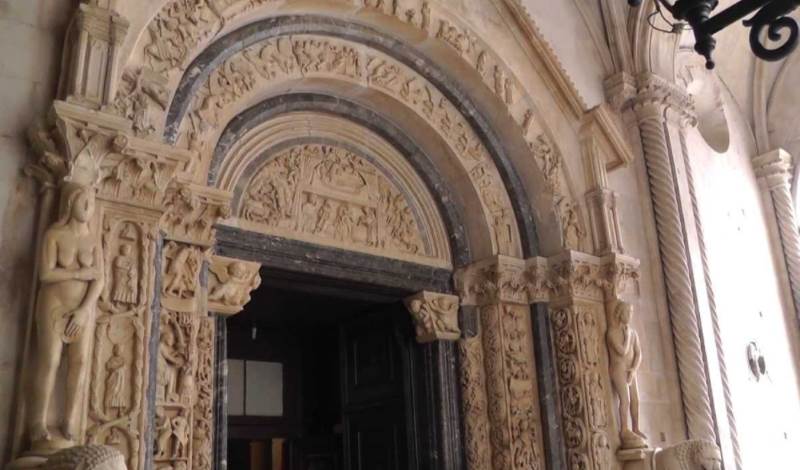
Radovan's Portal (which we have already written about) is the main portal of the cathedral and also the most significant medieval portal on the eastern Adriatic, and in this part of Europe. The portal is named after its author, Master Radovan, who carved it in 1240 and signed it with per Raduanum. The sculpture of the portal is a characteristic example of Gothic realism and humanism, but with features of the older Romanesque style.
 The interior of the cathedral is adorned by a great altar in the shape of a splendid baldachin, the work of Master Mavro from the 14th century. On the ciborium are statues of Our Lady and the Angel (the Annunciation). At the sides of the altar, against the wall, stand statues of St John of Trogir and St Lawrence, in the Baroque style, from the 18th century.
On the wall to the left of the altar is a well with a crowning surround (1661). The octagonal pulpit with Romanesque capitals is the work of the local art school from the 13th century, while the choir's wooden seats are the work of Ivan Budislavić, built in the 15th century.
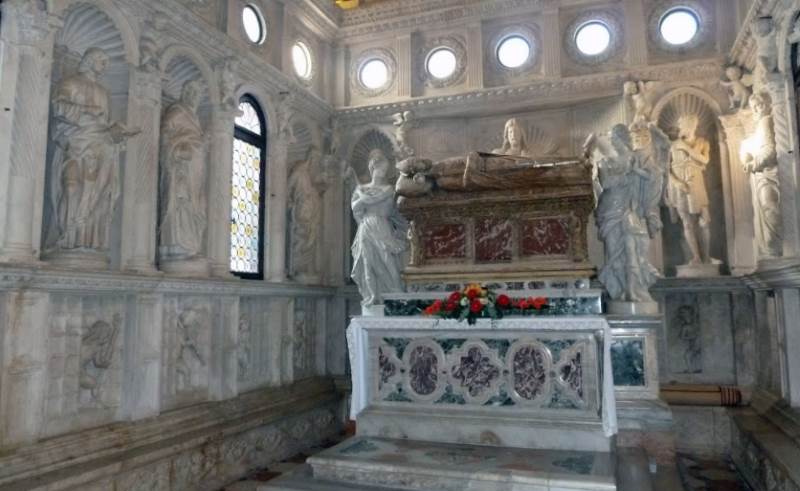
The Chapel of St John is, for the people of Trogir, one of the most beautiful Renaissance monuments in Europe. We mention the chapel because it stands attached to the north wall of the cathedral, on the site where a house once stood. The walls of the chapel are divided into four zones: a base in the shape of a bench, a frieze with torch-bearing putti, a central zone with niches for sculptures, and an attic with round window openings.
 In Trogir Cathedral there are several tombs of famous Trogir families, so we should mention the tombs of the Lučić, Andreis, Kazotić and Bugoforte families, among others, as well as that of Prince Mladen III Šubić of Bribir, and of the humanist Frane Frankvil Andronik. In the cathedral's sacristy is kept most of the treasury, with various historical and artistic objects.
 Apartman MašaTrogirCapacity: 1-4 · To the sea: 250 mView offer
 VongolaTrogirCapacity: 2-4 · To the sea: 100 mfrom 17,67 € per person / nightView offer
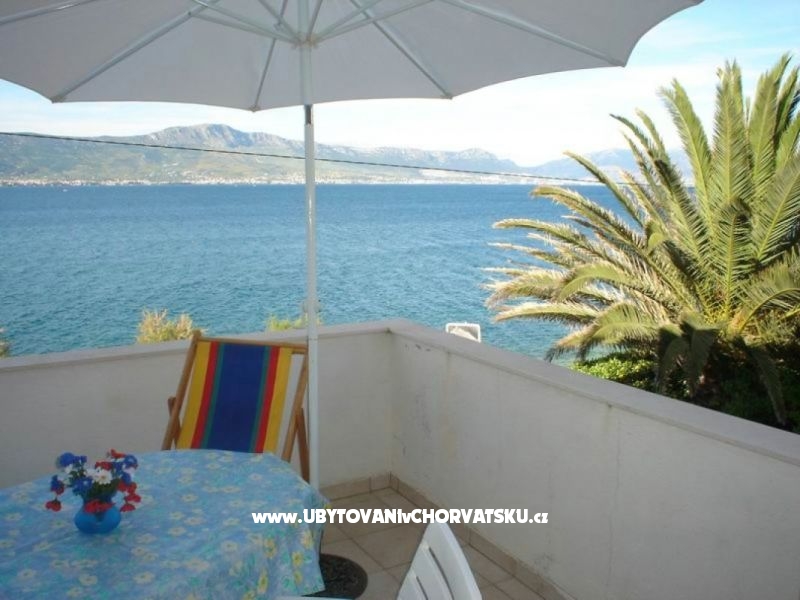 Apartmani AdriaTrogirCapacity: 2-8 · To the sea: 1 mfrom 15 € per person / nightView offer
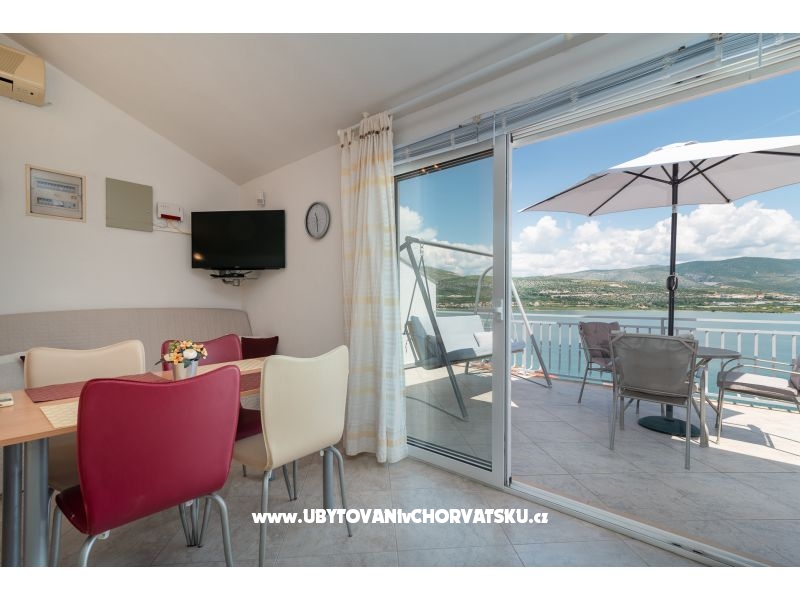 Apartments MandicTrogirCapacity: 3-7 · To the sea: 100 mfrom 17,50 € per person / nightView offer
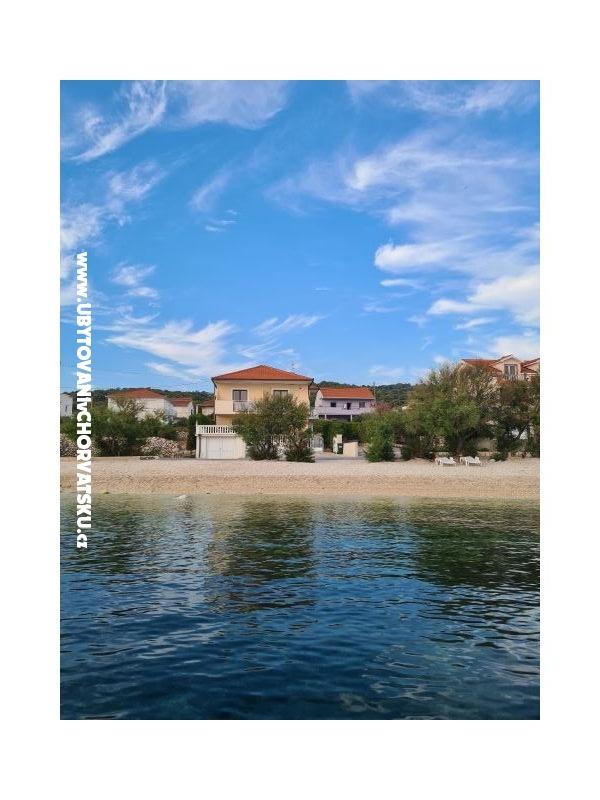 Apartmani BobanTrogirCapacity: 2-11 · To the sea: 10 mfrom 18,50 € per person / nightView offer
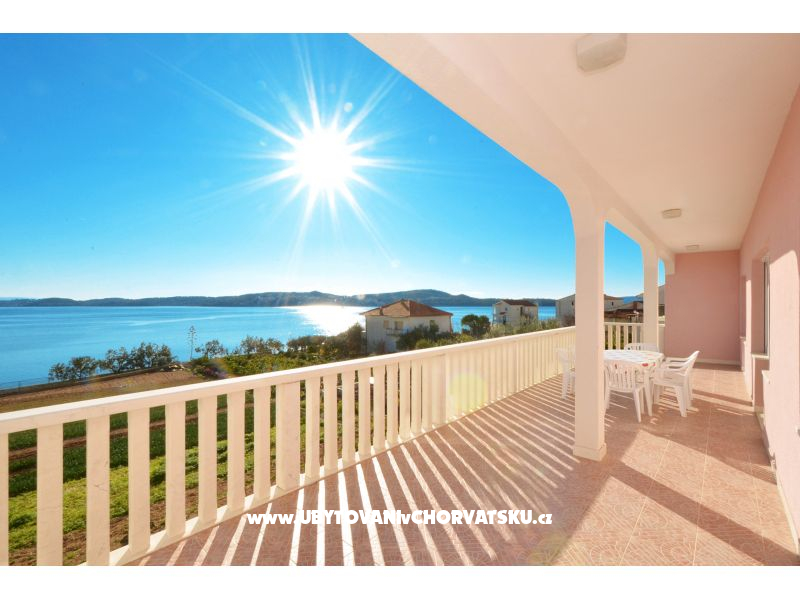 PavkoTrogirCapacity: 4-16 · To the sea: 30 mView offer
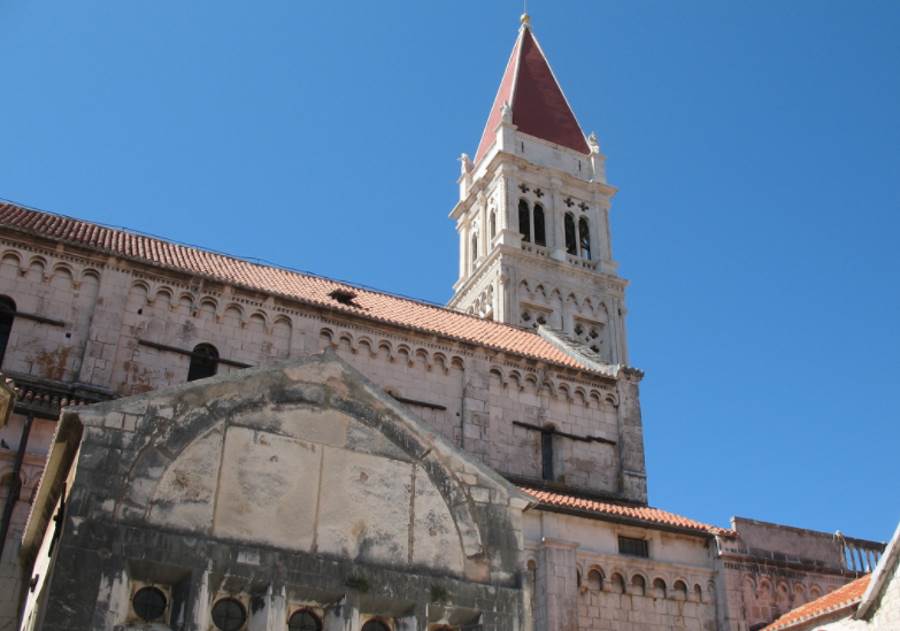
The Cathedral of St Lawrence was mostly built in the Romanesque style (by the masters Stjepan and Matej) by 1251, while the Gothic vault was built in the 15th century.
Construction was completed in 1589 with the finishing of the top storey of the bell tower in the Mannerist style, the work of the architect Trifun Bokanić (1575–1609), whose construction lasted almost two centuries. The first storey, the work of Matija Gojković, was built in the Gothic style (after the Venetians destroyed it in 1420); the second bears the hallmark of the Venetian floral Gothic of the 15th century (with windows reminiscent of the windows of the Ca' d'Oro).In 1460, Andrija Aleši was given the task of adding a baptistery alongside the vaulted vestibule of the Cathedral of St Lawrence. At the same time as the construction of the baptistery began, Aleši also worked on remodelling the cathedral sacristy. Construction of the baptistery lasted until 1467. In 1468, Andrija Aleši and Nikola Firentinac signed a contract with the Trogir chapter for the construction of the chapel of St John of Trogir. The third storey of the bell tower was completed at the end of the 16th century, and the fourth, pyramidal top, is adorned with four Mannerist sculptures by the Venetian sculptor Alessandro Vittoria (1525–1608).
The Construction of Trogir Cathedral
In terms of its arcade construction, Trogir Cathedral is archaic, since the naves are separated by massive longitudinal piers. This is actually a thick wall in which passages with arches have been cut through, which is still an early Romanesque method. But Trogir Cathedral is at the same time the most monumental of all the Dalmatian Romanesque cathedrals and churches, as it is the only one vaulted over all three naves (the central nave, admittedly, only as late as the 15th century).
The stereometrically pure, closed mass of the church, with small window openings, is divided by pilasters on the southern side façade and by twisted half-columns on the apses, and is girded by a cornice of blind arcading.
On the central façade there is a small round opening containing a carved coat of arms of the most powerful dynasty of the Croato-Hungarian Kingdom, the Angevin dynasty of King Louis.
The bell tower is one of the most interesting examples of the growth of an architectural monument through time in Europe. Today it shows a cross-section of all the styles that appeared in Dalmatia from the Romanesque to the Mannerist period.
Radovan's Portal (which we have already written about) is the main portal of the cathedral and also the most significant medieval portal on the eastern Adriatic, and in this part of Europe. The portal is named after its author, Master Radovan, who carved it in 1240 and signed it with per Raduanum. The sculpture of the portal is a characteristic example of Gothic realism and humanism, but with features of the older Romanesque style.
The interior of the cathedral is adorned by a great altar in the shape of a splendid baldachin, the work of Master Mavro from the 14th century. On the ciborium are statues of Our Lady and the Angel (the Annunciation). At the sides of the altar, against the wall, stand statues of St John of Trogir and St Lawrence, in the Baroque style, from the 18th century.On the wall to the left of the altar is a well with a crowning surround (1661). The octagonal pulpit with Romanesque capitals is the work of the local art school from the 13th century, while the choir's wooden seats are the work of Ivan Budislavić, built in the 15th century.
A Renaissance Monument in the Heart of Trogir
The Chapel of St John is, for the people of Trogir, one of the most beautiful Renaissance monuments in Europe. We mention the chapel because it stands attached to the north wall of the cathedral, on the site where a house once stood. The walls of the chapel are divided into four zones: a base in the shape of a bench, a frieze with torch-bearing putti, a central zone with niches for sculptures, and an attic with round window openings.
In Trogir Cathedral there are several tombs of famous Trogir families, so we should mention the tombs of the Lučić, Andreis, Kazotić and Bugoforte families, among others, as well as that of Prince Mladen III Šubić of Bribir, and of the humanist Frane Frankvil Andronik. In the cathedral's sacristy is kept most of the treasury, with various historical and artistic objects.Private accommodation in Trogir – directly from the owners
All accommodation in Trogir →Apartman MašaTrogirCapacity: 1-4 · To the sea: 250 mView offerVongolaTrogirCapacity: 2-4 · To the sea: 100 mfrom 17,67 € per person / nightView offerApartmani AdriaTrogirCapacity: 2-8 · To the sea: 1 mfrom 15 € per person / nightView offerApartments MandicTrogirCapacity: 3-7 · To the sea: 100 mfrom 17,50 € per person / nightView offerApartmani BobanTrogirCapacity: 2-11 · To the sea: 10 mfrom 18,50 € per person / nightView offerPavkoTrogirCapacity: 4-16 · To the sea: 30 mView offerFollow us on Facebook for more articles about Croatia. Share this article using the buttons on the right. Thank you!
Upgrade this article
Bio si na ovom mjestu? Podijeli s nama svoja iskustva ili fotografije.
Napiši svoju verziju članka. Nagrađujemo vlasnike apartmana.