
If you have come to Trogir and enjoy sightseeing and seeking out historical treasures – the Radovan Portal is a building you must visit.
This is a striking building that captures attention in every possible way. This is the main portal of the Cathedral of St Lawrence in Trogir, known as the Radovan Portal.
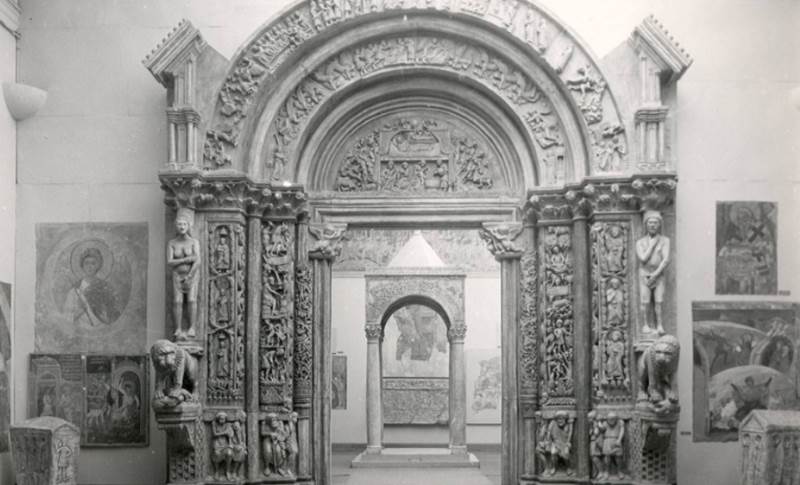 It was built during the reign of Duke Koloman, who, as the younger brother of King Béla IV, governed Croatia, Slavonia and Dalmatia. Koloman was an extremely significant Croatian ruler who encouraged the construction of Trogir Cathedral, and thanks to him numerous monuments were also being raised in the north of Croatia at the same time. Today many people enjoy simply looking at this impressive building, but you can get the full experience once you get to know it even better. So let's head in that direction, getting acquainted with the interesting details of this structure.
The inscriptions at the base of the lunette actually confirm that the portal was built during the reign of Koloman.
According to that same inscription, we learn that at the time the portal was being built, Bishop Treguan resided in Trogir. A native of Florence, Treguan was a well-educated cleric, brought to Dalmatia from Hungary in 1200 as a young grammarian and professor of literature by the Archbishop of Split, Bernard.
Because of his strong education, Treguan quickly rose through the church hierarchy. Thus, as early as 1206, he became Bishop of Trogir. During his life, Bishop Treguan distinguished himself as a fierce fighter against heretical teaching and heterodoxy in the area of his diocese, in Split and Trogir, but also beyond it. He supported the efforts of kings and popes to root out the Cathar heresy in Bosnia, and it is in this context that the construction of the portal of Trogir Cathedral is also placed. Indeed, behind its construction lies Bishop Treguan's anti-heretical programme, which is vividly indicated by the sign of the cross on the reverse of the portal's lunette, with the inscription: „Whoever believes that the sign of the cross is the path of light, let them do nothing unworthy against the honourable sign.“
After it was built in its original form, the Radovan Portal was reconstructed and extended on several occasions. It has not been fully established how many times the portal was rebuilt. Nevertheless, it is certain that the portal's sculptures are the work of several sculptors who both completed Radovan's work and carried out a series of various restorations after the cathedral's construction was finished.
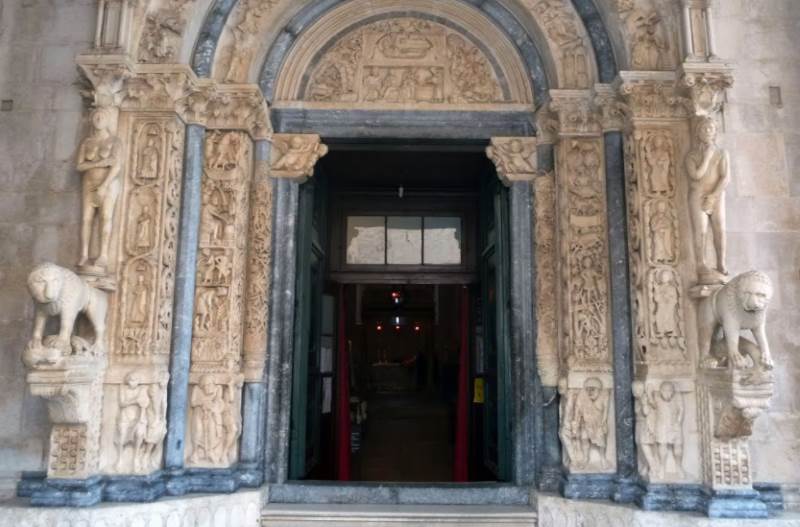 Originally, the portal was located in the vestibule of the Romanesque bell tower, in front of the cathedral. It consisted of an outer portal before the entrance to the vestibule, and an inner one before the entrance to the cathedral. The Romanesque vestibule itself was also considerably smaller than today's. It was only large enough to cover the entrance to the church in front of the main nave, like similar vestibules of Romanesque cathedrals on the other side of the Adriatic, in Modena, Bologna and Ferrara.
During the 1270s, under Treguan's successor, Bishop Columbanus, the first Romanesque-Gothic reconstruction of Trogir Cathedral began. The largest extension, through which the Radovan Portal was completely rearranged, took place in the 14th century, during the reconstruction of the cathedral's vestibule, when a spacious three-bay atrium was built, above which the construction of two Gothic bell towers had been planned.
The portal was last rearranged in the 1460s, when Renaissance capitals with putti, the work of Nikola Firentinac, were inserted beneath its lintel, and, through an intervention at the end of the 17th century, a Gothic statue of St Lawrence, taken from the old, demolished chapel of St John of Trogir, was placed in a Baroque niche.
This is, in fact, the form of the portal that we enjoy today, the one we look at and admire. The construction of the portal actually took a long time, especially if we take into account the many extensions and building phases carried out by various authors.
As we have already written, the sculptures of the Trogir portal are the work of several sculptors who completed Radovan's work. The Nativity of Christ, the central motif of the portal depicted on the lunette, is attributed to Master Radovan. The upper part shows the Virgin with Jesus in the stable, and the lower part the Washing of the Child in an ornamented stone basin. Present in this scene are Joseph and a shepherd, together with two women. On the right-hand side is a depiction of the Arrival of the Three Kings, and on the left the Adoration of the Shepherds. At the top of the composition are the Star of Bethlehem and angels.
Today we know that Radovan made most of the first concentric arch, which was originally located right next to the lunette, and which depicted the Annunciation, with the angel Gabriel in the left springer of the arch, and the Virgin Mary in the right one. On both sides, two more stone segments continue, with reliefs of angels, of which the upper ones are not Radovan's work. At the top is the Adoration of the Kings on the left side, and Joseph's Dream on the right. Everything except the two angel reliefs is the work of Master Radovan.
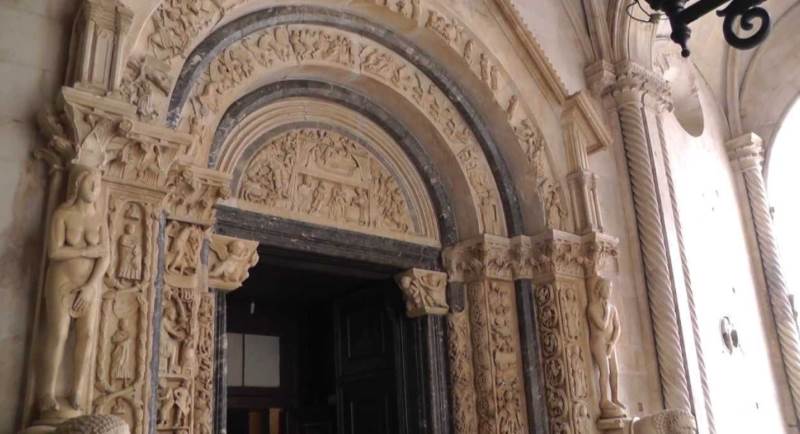 The relief of the outer arch was also commissioned by Radovan. It was made by Gothic masters, and it depicts motifs from the life of Christ, with the central scene of the Crucifixion. On the left-hand side are depicted: the Flight into Egypt, the Entry into Jerusalem, scenes of the Washing of the Feet, the Arrest and the Flagellation, and on the right the Baptism, the Temptation, the Three Marys at the Tomb and the Resurrection. Above the lunette is a niche with a Gothic statue of St Lawrence.
The portal has two rows of recessed jambs decorated with reliefs, and two carved round columns with scenes of hunting and wild beasts. The inner jambs, decorated with allegories of the months and depictions of the work associated with them, are the work of Master Radovan. On the left-hand side, the months can be seen arranged from top to bottom – December, January and February, while on the right are April and March. All the side faces of the columns are decorated with depictions of people and animals interwoven in tendrils with floral motifs. The motifs are the work of Master Radovan, all except the allegory of February on the left-hand jamb.
On the outer jambs, which are not Radovan's work, there are depictions of the apostles. There are three motifs on each side. From the left, from top to bottom, are depicted St Peter and St Bartholomew (and St John). On the inner sides are depictions of animals, which are likewise interwoven in tendrils with floral motifs. At their bases, the motifs are carried by telamons, while on the outer sides are corbels with lions, on which stand statues of the first parents, Adam and Eve.
The Radovan Portal is the main portal of the Cathedral of St Lawrence in Trogir. This building is also the most significant medieval portal on the eastern Adriatic, and in this part of Europe.
It is named after its author, Master Radovan, who carved it in 1240 and signed it with per Raduanum. Although Radovan himself began the construction, the portal was not completed until the 14th century.
The portal is the most monumental work of the Romanesque-Gothic style in Croatia. It depicts the Original Sin (Adam and Eve) and the Redemption (the Nativity of Christ). The portal also has other motifs – a Christological cycle, individual saints and apostles, a depiction of the months, hunting scenes, and stylistically it brings together various traditions, from southern Italian to French.
From an artistic point of view, this portal is on a par with the finest European achievements of its time.
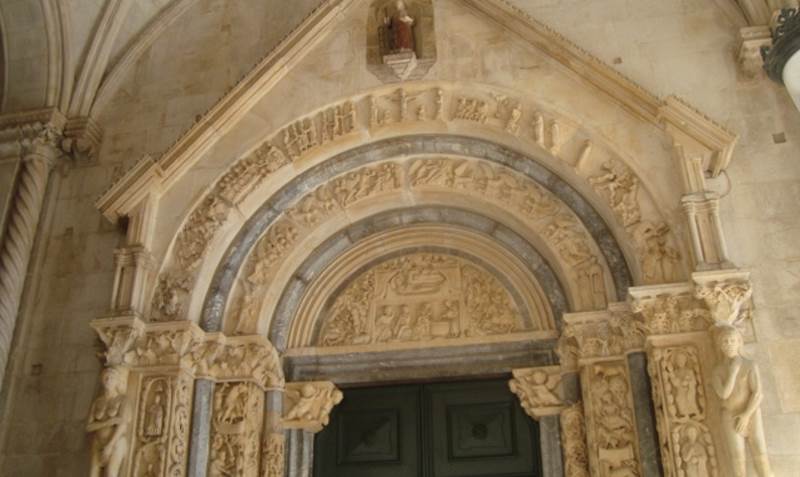 The portal is made in such a way that it is drawn into the thickness of the wall in stages. The lunette depicts the Nativity of Christ (the promise of salvation), instead of the Last Judgement, which is customary for the main portals of cathedrals in the West. In its two arches above the lunette are scenes from biblical stories. The highest-quality parts of the portal are attributed to Master Radovan, while the rest is attributed to his workshop. The sculpture of the portal is a characteristic example of Gothic realism and humanism, but with features of the older Romanesque style.
On the columns beside the doors are hunting scenes interwoven with plant tendrils, in such a way that the scenes appear to take place in some kind of forest. On the portal's jambs are detailed depictions of the signs of the zodiac and the works of the months (scenes from everyday life), with marked plasticity. At the sides are the figures of Adam (right) and Eve (left), standing on lions.
Nearby facilities: Cathedral of St. Lawrence, Crkva Sv. Lovre, Trogir, Caffe Bar "Smokvica", Restaurant Vanjaka, Caffe Trogir, café "Deboto", Konoba Idro, Konoba Trs, Konoba Teuta Garden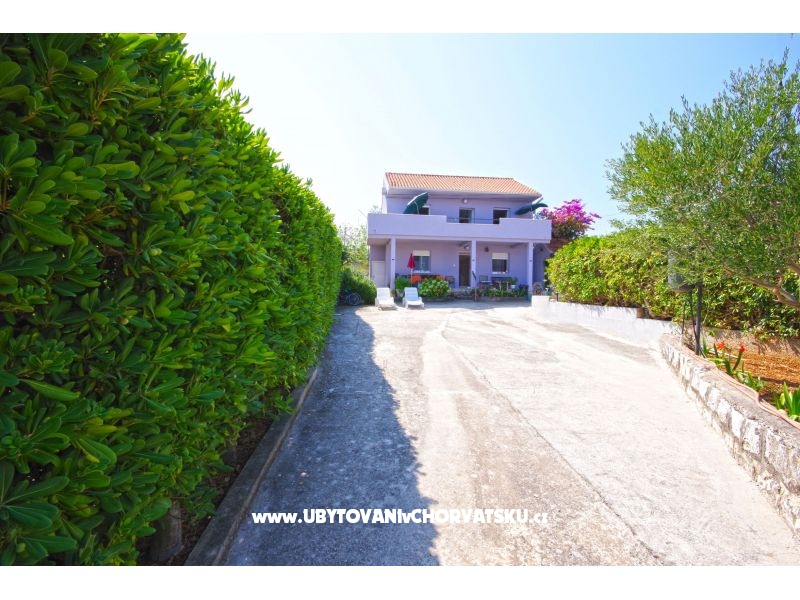 Bosi&coTrogirCapacity: 2-4 · To the sea: 30 mfrom 15 € per person / nightView offer
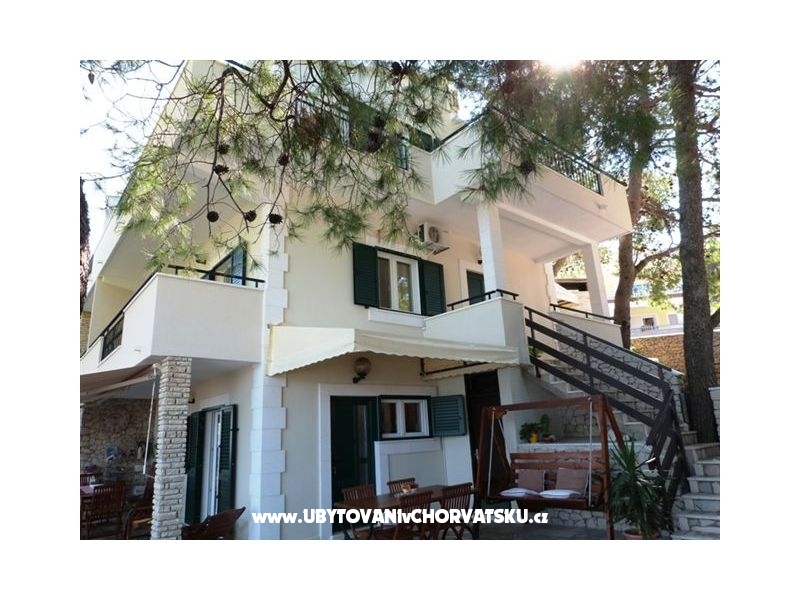 Apartments-cupic-trogir.comTrogirCapacity: 2-25 · To the sea: 10 mfrom 20 € per person / nightView offer
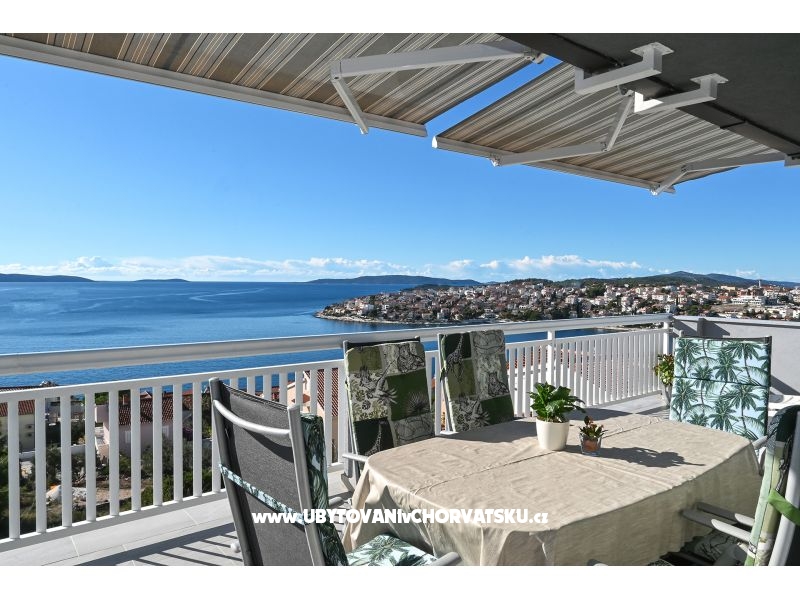 Apartments TiaTrogirCapacity: 2-12 · To the sea: 300 mfrom 9,63 € per person / nightView offer
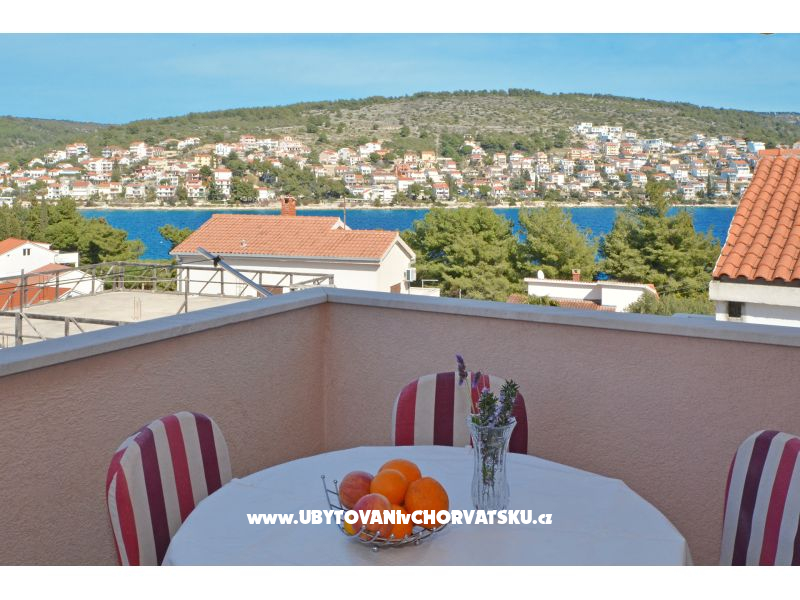 Bocic ApartmentsTrogirCapacity: 4-8 · To the sea: 70 mView offer
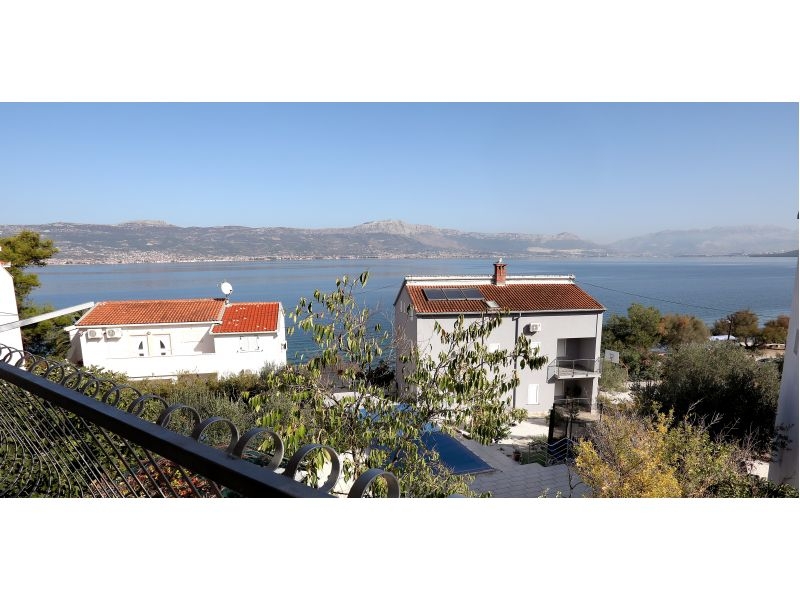 Apartment TrogirTrogirTo the sea: 50 mfrom 9 € per person / nightView offer
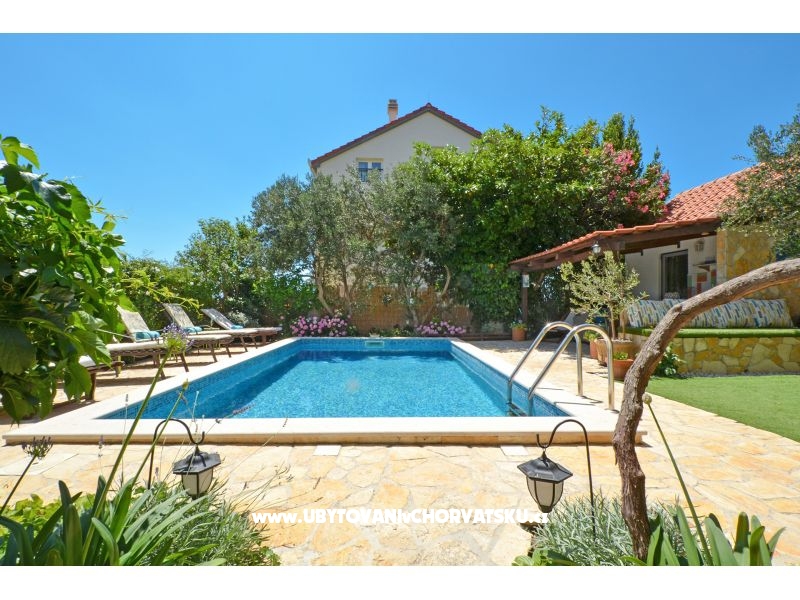 Lux OasisTrogirCapacity: 12-12 · To the sea: 550 mfrom 16,59 € per person / nightView offer
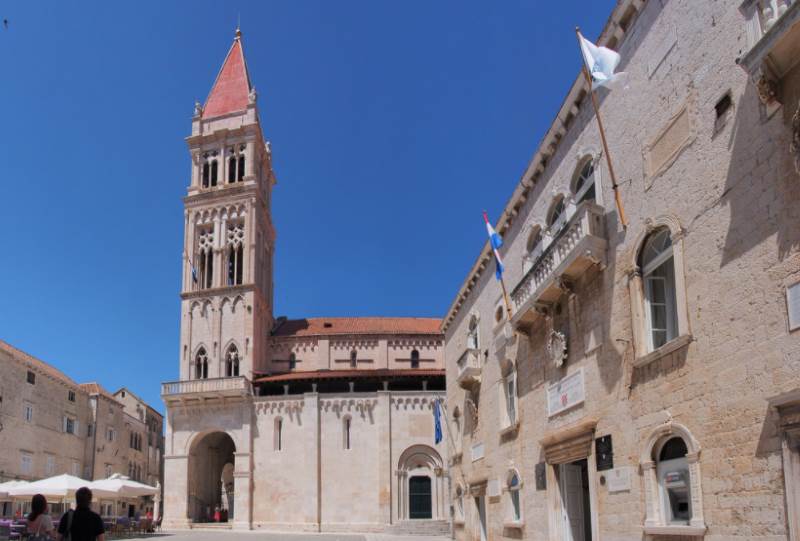
It was built during the reign of Duke Koloman, who, as the younger brother of King Béla IV, governed Croatia, Slavonia and Dalmatia. Koloman was an extremely significant Croatian ruler who encouraged the construction of Trogir Cathedral, and thanks to him numerous monuments were also being raised in the north of Croatia at the same time. Today many people enjoy simply looking at this impressive building, but you can get the full experience once you get to know it even better. So let's head in that direction, getting acquainted with the interesting details of this structure.Construction of the Portal and the Time of Duke Koloman's Rule
The inscriptions at the base of the lunette actually confirm that the portal was built during the reign of Koloman.
According to that same inscription, we learn that at the time the portal was being built, Bishop Treguan resided in Trogir. A native of Florence, Treguan was a well-educated cleric, brought to Dalmatia from Hungary in 1200 as a young grammarian and professor of literature by the Archbishop of Split, Bernard.
Because of his strong education, Treguan quickly rose through the church hierarchy. Thus, as early as 1206, he became Bishop of Trogir. During his life, Bishop Treguan distinguished himself as a fierce fighter against heretical teaching and heterodoxy in the area of his diocese, in Split and Trogir, but also beyond it. He supported the efforts of kings and popes to root out the Cathar heresy in Bosnia, and it is in this context that the construction of the portal of Trogir Cathedral is also placed. Indeed, behind its construction lies Bishop Treguan's anti-heretical programme, which is vividly indicated by the sign of the cross on the reverse of the portal's lunette, with the inscription: „Whoever believes that the sign of the cross is the path of light, let them do nothing unworthy against the honourable sign.“
After it was built in its original form, the Radovan Portal was reconstructed and extended on several occasions. It has not been fully established how many times the portal was rebuilt. Nevertheless, it is certain that the portal's sculptures are the work of several sculptors who both completed Radovan's work and carried out a series of various restorations after the cathedral's construction was finished.
Originally, the portal was located in the vestibule of the Romanesque bell tower, in front of the cathedral. It consisted of an outer portal before the entrance to the vestibule, and an inner one before the entrance to the cathedral. The Romanesque vestibule itself was also considerably smaller than today's. It was only large enough to cover the entrance to the church in front of the main nave, like similar vestibules of Romanesque cathedrals on the other side of the Adriatic, in Modena, Bologna and Ferrara.During the 1270s, under Treguan's successor, Bishop Columbanus, the first Romanesque-Gothic reconstruction of Trogir Cathedral began. The largest extension, through which the Radovan Portal was completely rearranged, took place in the 14th century, during the reconstruction of the cathedral's vestibule, when a spacious three-bay atrium was built, above which the construction of two Gothic bell towers had been planned.
The portal was last rearranged in the 1460s, when Renaissance capitals with putti, the work of Nikola Firentinac, were inserted beneath its lintel, and, through an intervention at the end of the 17th century, a Gothic statue of St Lawrence, taken from the old, demolished chapel of St John of Trogir, was placed in a Baroque niche.
This is, in fact, the form of the portal that we enjoy today, the one we look at and admire. The construction of the portal actually took a long time, especially if we take into account the many extensions and building phases carried out by various authors.
As we have already written, the sculptures of the Trogir portal are the work of several sculptors who completed Radovan's work. The Nativity of Christ, the central motif of the portal depicted on the lunette, is attributed to Master Radovan. The upper part shows the Virgin with Jesus in the stable, and the lower part the Washing of the Child in an ornamented stone basin. Present in this scene are Joseph and a shepherd, together with two women. On the right-hand side is a depiction of the Arrival of the Three Kings, and on the left the Adoration of the Shepherds. At the top of the composition are the Star of Bethlehem and angels.
Some Further Features of the Portal
Today we know that Radovan made most of the first concentric arch, which was originally located right next to the lunette, and which depicted the Annunciation, with the angel Gabriel in the left springer of the arch, and the Virgin Mary in the right one. On both sides, two more stone segments continue, with reliefs of angels, of which the upper ones are not Radovan's work. At the top is the Adoration of the Kings on the left side, and Joseph's Dream on the right. Everything except the two angel reliefs is the work of Master Radovan.
The relief of the outer arch was also commissioned by Radovan. It was made by Gothic masters, and it depicts motifs from the life of Christ, with the central scene of the Crucifixion. On the left-hand side are depicted: the Flight into Egypt, the Entry into Jerusalem, scenes of the Washing of the Feet, the Arrest and the Flagellation, and on the right the Baptism, the Temptation, the Three Marys at the Tomb and the Resurrection. Above the lunette is a niche with a Gothic statue of St Lawrence.The portal has two rows of recessed jambs decorated with reliefs, and two carved round columns with scenes of hunting and wild beasts. The inner jambs, decorated with allegories of the months and depictions of the work associated with them, are the work of Master Radovan. On the left-hand side, the months can be seen arranged from top to bottom – December, January and February, while on the right are April and March. All the side faces of the columns are decorated with depictions of people and animals interwoven in tendrils with floral motifs. The motifs are the work of Master Radovan, all except the allegory of February on the left-hand jamb.
On the outer jambs, which are not Radovan's work, there are depictions of the apostles. There are three motifs on each side. From the left, from top to bottom, are depicted St Peter and St Bartholomew (and St John). On the inner sides are depictions of animals, which are likewise interwoven in tendrils with floral motifs. At their bases, the motifs are carried by telamons, while on the outer sides are corbels with lions, on which stand statues of the first parents, Adam and Eve.
The Cathedral of St Lawrence in Trogir
The Radovan Portal is the main portal of the Cathedral of St Lawrence in Trogir. This building is also the most significant medieval portal on the eastern Adriatic, and in this part of Europe.
It is named after its author, Master Radovan, who carved it in 1240 and signed it with per Raduanum. Although Radovan himself began the construction, the portal was not completed until the 14th century.
The portal is the most monumental work of the Romanesque-Gothic style in Croatia. It depicts the Original Sin (Adam and Eve) and the Redemption (the Nativity of Christ). The portal also has other motifs – a Christological cycle, individual saints and apostles, a depiction of the months, hunting scenes, and stylistically it brings together various traditions, from southern Italian to French.
From an artistic point of view, this portal is on a par with the finest European achievements of its time.
The portal is made in such a way that it is drawn into the thickness of the wall in stages. The lunette depicts the Nativity of Christ (the promise of salvation), instead of the Last Judgement, which is customary for the main portals of cathedrals in the West. In its two arches above the lunette are scenes from biblical stories. The highest-quality parts of the portal are attributed to Master Radovan, while the rest is attributed to his workshop. The sculpture of the portal is a characteristic example of Gothic realism and humanism, but with features of the older Romanesque style.On the columns beside the doors are hunting scenes interwoven with plant tendrils, in such a way that the scenes appear to take place in some kind of forest. On the portal's jambs are detailed depictions of the signs of the zodiac and the works of the months (scenes from everyday life), with marked plasticity. At the sides are the figures of Adam (right) and Eve (left), standing on lions.
Nearby facilities: Cathedral of St. Lawrence, Crkva Sv. Lovre, Trogir, Caffe Bar "Smokvica", Restaurant Vanjaka, Caffe Trogir, café "Deboto", Konoba Idro, Konoba Trs, Konoba Teuta Garden
Private accommodation in Trogir – directly from the owners
All accommodation in Trogir →Bosi&coTrogirCapacity: 2-4 · To the sea: 30 mfrom 15 € per person / nightView offerApartments-cupic-trogir.comTrogirCapacity: 2-25 · To the sea: 10 mfrom 20 € per person / nightView offerApartments TiaTrogirCapacity: 2-12 · To the sea: 300 mfrom 9,63 € per person / nightView offerBocic ApartmentsTrogirCapacity: 4-8 · To the sea: 70 mView offerApartment TrogirTrogirTo the sea: 50 mfrom 9 € per person / nightView offerLux OasisTrogirCapacity: 12-12 · To the sea: 550 mfrom 16,59 € per person / nightView offerFollow us on Facebook for more articles about Croatia. Share this article using the buttons on the right. Thank you!
Upgrade this article
Bio si na ovom mjestu? Podijeli s nama svoja iskustva ili fotografije.
Napiši svoju verziju članka. Nagrađujemo vlasnike apartmana.