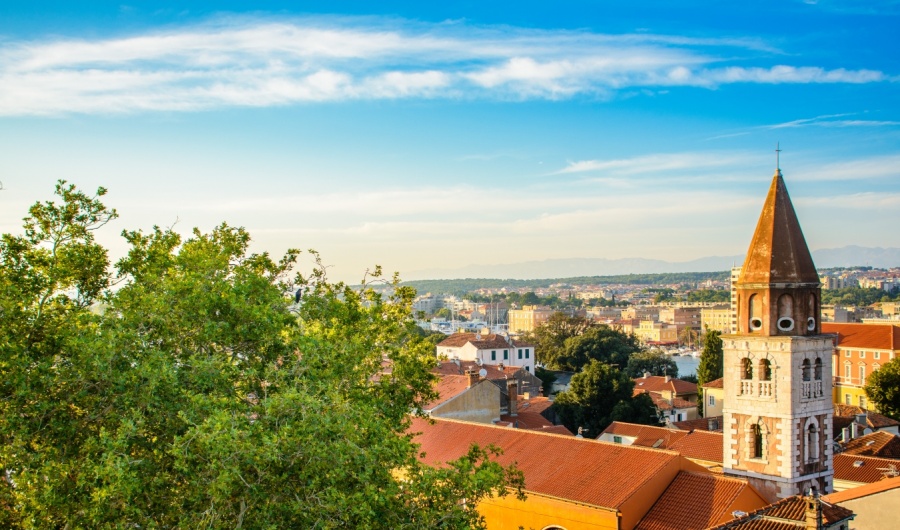

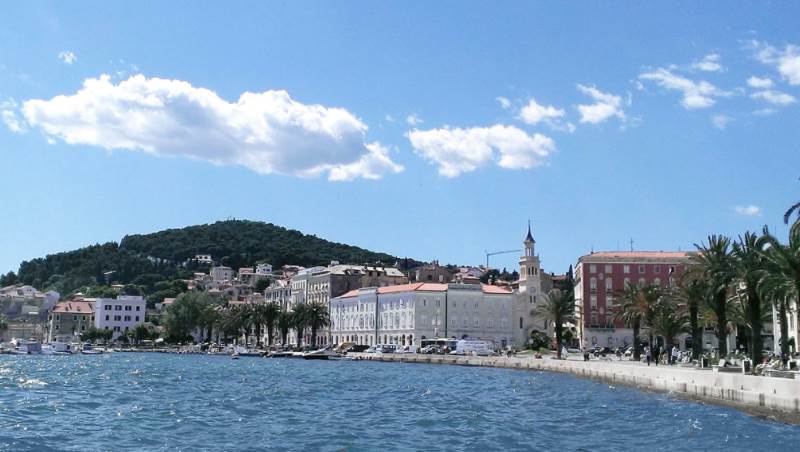
Marjan is a hill in Split, whose shape forms a peninsula. On Marjan there is a forest park located on the western part of the Split peninsula, while below Marjan, to the east, lies the city of Split.
The hill itself is 178 metres high, and its highest peak is called Telegrin. The name Telegrin comes from the Napoleonic era, since an old telegraph station once stood at the top of Marjan. Marjan is inseparable from Split and the Split peninsula, and it stretches from Marmontova Street towards the west. The hill is about 3.5 km long, with a maximum width of 1.5 km. On the southern side, Marjan has the peninsula of Sustipan, which together with Marjan encloses the town harbour. The hill's natural position forms a natural breakwater for Kaštela Bay. Marjan covers an area of around 340 ha, of which half is covered by pine forest.
Because of its natural beauty and diversity, Marjan was declared a forest park in 1964. This made the hill in Split protected under the Nature Protection Act of the Republic of Croatia.
 The name Marjan is first mentioned in the first half of the eighth century as Marianum. Over the years, however, the name changed, giving rise to the known forms Marulianus, Mergnanus, Murnanus, Marnanus, Murnano, Marnano, Mergnano, Mernjan, Marglian, Mirgnan and Megnan.
Today's name arose in the 19th century from the older form Merjan, which is still preserved today among older residents of Split.
We have already covered this, but to briefly frame the story of Marjan. So, Marjan is a hill that rises above Split, with its highest peak at 178 metres. Marjan has always been the most striking part of Split's image. It is rare to experience such harmony between nature and urban life. On one side we have a densely populated city in its full splendour, and on the other a peninsula of almost untouched nature.
 It is often also called the Holy Hill, because it conceals many monuments of both sacred and secular architecture. Today these monuments are fused with the natural beauty, forming a symbiosis of historical heritage and natural activity.
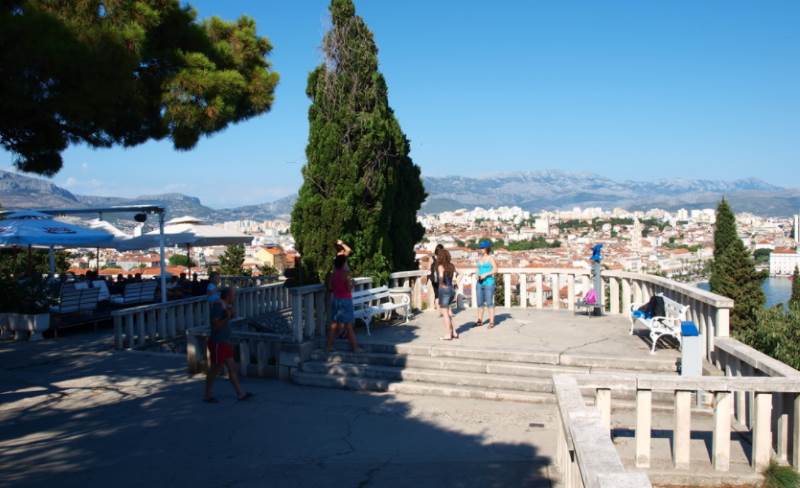
Many nature lovers come to Marjan. You can climb the hill directly from Split's beautiful and world-famous waterfront promenade. This gives visitors from any corner of the world the chance to experience the beauty of this forest park, its fresh air, and the stunning views of Split and the islands. Marjan also has several viewpoints that complete the experience and offer a beautiful view of certain parts of Split and the sea surrounding this lovely city.
Walkers will certainly enjoy Marjan. The paths are laid out just for them and for that purpose. Every year a great number of guests of all ages stroll along Marjan, both recreational walkers and professional athletes.
Marjan is part of the unmistakable postcard views of this city, and a place from which you can experience Split in its full splendour. If you visit Marjan you will take away completely unusual memories from a densely populated and touristically busy city.
A considerable number of small churches can be found in the Marjan area, and some of them are truly old and a valuable archaeological asset.
The area of the Split peninsula alone has 40 sacred buildings, and around the Marjan peninsula there are 12 churches.
We will mention a few of the churches on Marjan, starting with the Church of Our Lady of Seven Sorrows. This church is on the southern side of Marjan and was built in the 15th century. At the tip of Marjan, as the westernmost headland is locally called, stands another small church, St George's. The Church of St George has stood on Marjan since as early as the 9th century. A little further west and higher up, beneath sheer cliffs, lies the Church of St Jerome, built in the second half of the 15th century. Inside this church is a relief of St Jerome made by the sculptor Andrija Aleši. Near the little church is the Hermit's Cave, where St Jerome himself is said to have once lived. Besides all the mentioned churches, a little further east on the southern side stands the Bethlehem church, built in the 14th century but later rebuilt and extended several times. The Church of St Nicholas, located at Vidilica, is also very beautiful.
On the northern side of Marjan stands the Church of Our Lady of Spinut. This church is believed to have been built in the early Christian period, but today it shows all the features of a later rebuilding that took place in the Romanesque era. In Bene cove, on Marjan, there once stood the old Croatian Church of St Benedict. Today this church is in ruins, but it still stands there as evidence of a historical period of the city of Split. Its remains were discovered in 2002. It was built in pre-Romanesque style and is dated to the 9th-11th centuries.
There is a great deal of written evidence of other small churches too, but over time they were demolished, and the physical traces of their existence have been lost. Be that as it may, Marjan is worth visiting because there really is a lot to see here. It is a place where nature lovers will feel at home, as will amateur archaeologists and people who love history and historical heritage.
Few people today know that for a long time Marjan was a refuge for hermits. Yet this is a fact, and historians are well aware of it. It is discussed by Perislav Petrić in his feuilleton, published in Slobodna Dalmacija from 6 to 11 May 2003. We quote that short passage:
"In today's cave of St Jerome there once stood the old oratory of St Cyriacus in spelunca, in grotta, as recorded by Thomas the Archdeacon. Alongside the oratory it is recorded that there was, in the cliffs of the hill, a Kirijelejson, and furthermore this name is identical with St Cyriacus. And the cave further west in the vertical rock face, walled off by the Karepić family in 1523, was also a hermitage. Regarding the hermits or eremites on Marjan, Archbishop Cosmi states at the end of the 17th century that they were the guardians and sacristans of Marjan's churches"
On Marjan itself, several important institutions are active today. Some of them are known throughout the world, while others are there to serve people who come to Marjan. At the tip of Marjan operates the Institute of Oceanography and Fisheries, founded back in 1930. On the hill itself is the Natural History Museum, which also houses a zoo. It was founded in 1924. Marjan is further enriched by the Meteorological Observatory, which has stood there since 1926. The youngest of them all is MEDILS, the Mediterranean Institute for Life Sciences, which operates on the southern side of Marjan, in the Villa Dalmacija, the so-called Tito's Villa.
Walking or jogging on Marjan is one of the favourite pastimes of Split's residents. Yet this kind of recreation is not reserved exclusively for the local population. On the contrary, locals will gladly direct you towards Marjan and show you the best routes for walking on this hill. The walk usually begins at the Marjan Gate if you are walking the flat section, or at the first viewpoint, from where you can climb towards the zoo or towards Telegrin.
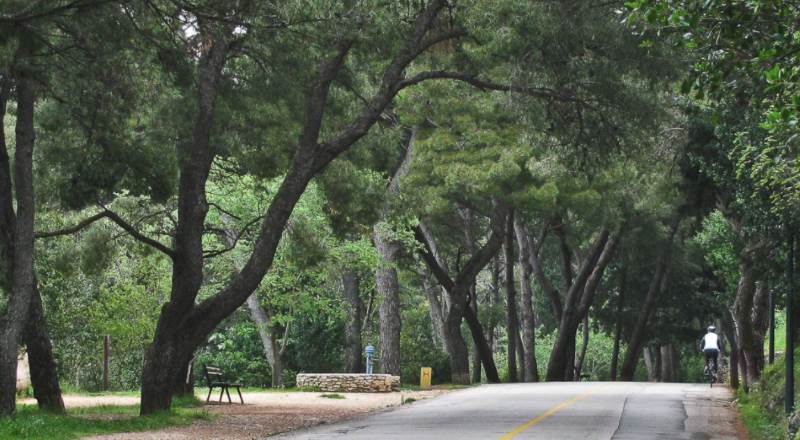 If you are walking the northern part, your route will begin at the northern gate, from where you can walk along the road or along the paved fitness trail. On both routes you pass the first, second and third spring, and after 1800 m you reach the only real resting spot along this route, Bene cove, or Bene for short, as it is more popularly known among locals. In the small cove along the way there is a catering establishment, a few sports grounds and a few pieces of play equipment for the youngest. During summer the cove also has a slide for sliding into the sea, which is reason enough for the cove to be packed with bathers during the summer months. However, if you are still up for walking, we suggest you continue on, along the road towards the far tip of Marjan, a distance of about one kilometre. Along the way you will pass an abandoned naval demagnetisation station, which is still owned by the military.
The walk along the southern slopes of Marjan usually begins at the first viewpoint, located at the top of Nazorov prilaz street. From this point you can climb to the second viewpoint via a large paved slope or steps. Right at the start, just by the viewpoint, to the north of the promenade, lies the old Jewish cemetery. At the second viewpoint stands the Church of St Nicholas. After that the path continues towards Sedlo (the Saddle), where you can also see a plaque with verses by Luka Botić. From Sedlo, the path along the southern slopes continues along the Marangunić promenade, passing the Church of St Jerome and the hermit settlements, descending to the ramp beside the Institute of Oceanography and Fisheries.
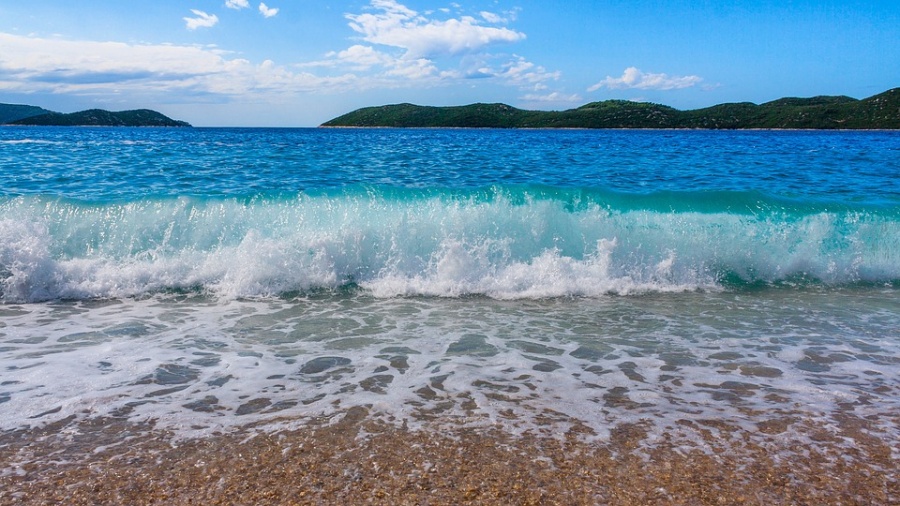
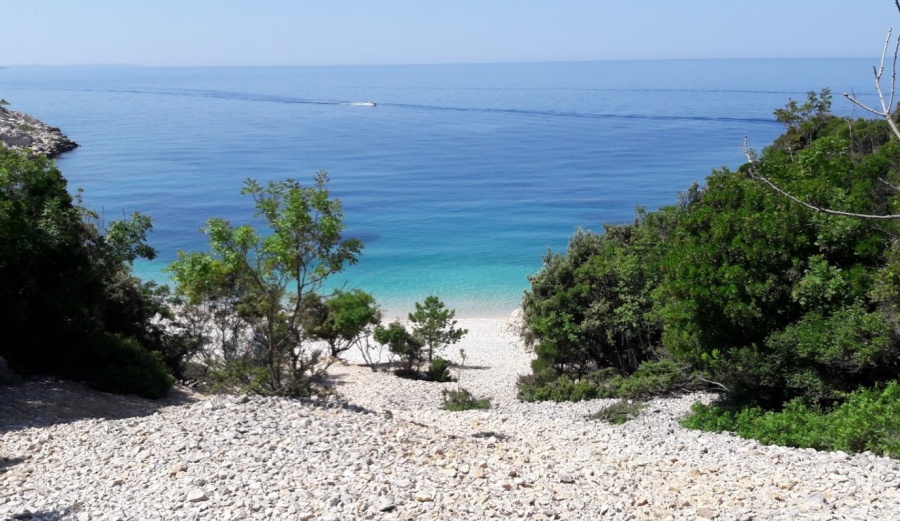
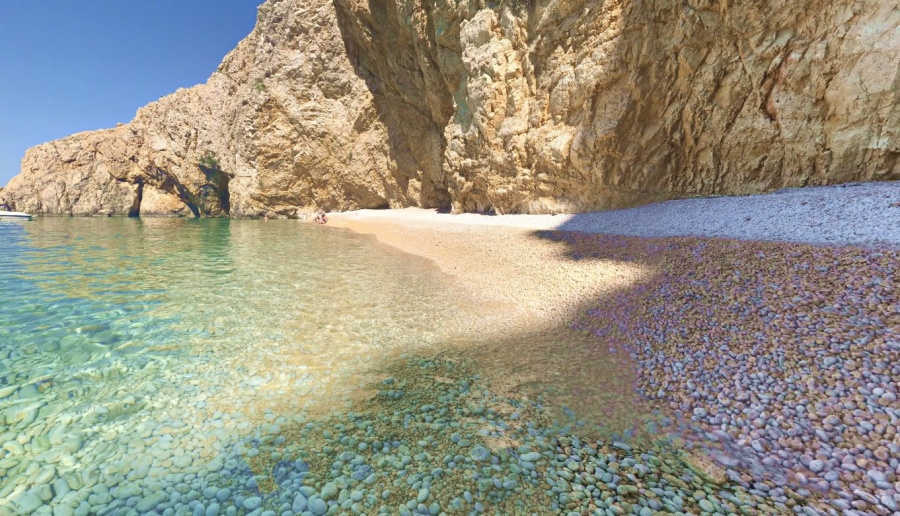
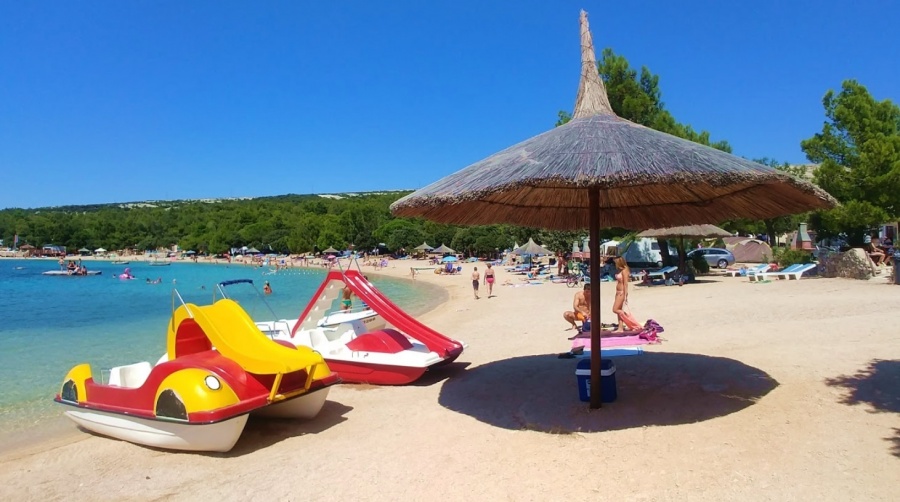
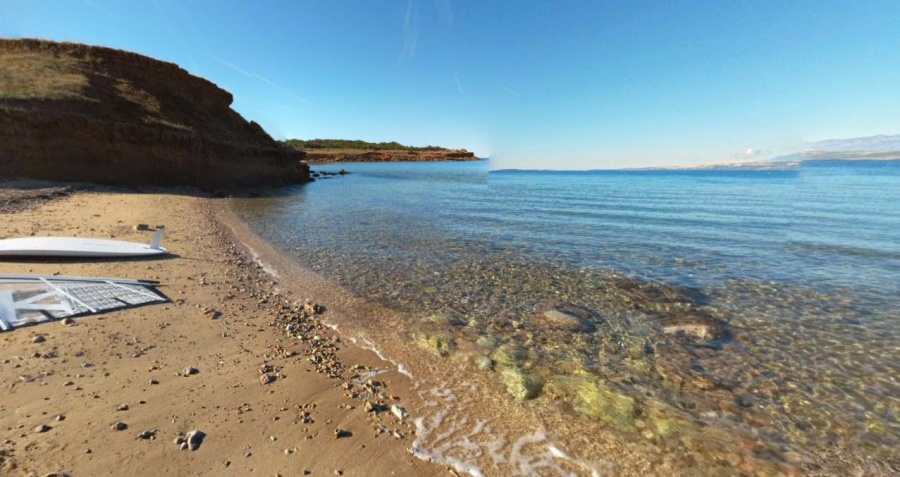
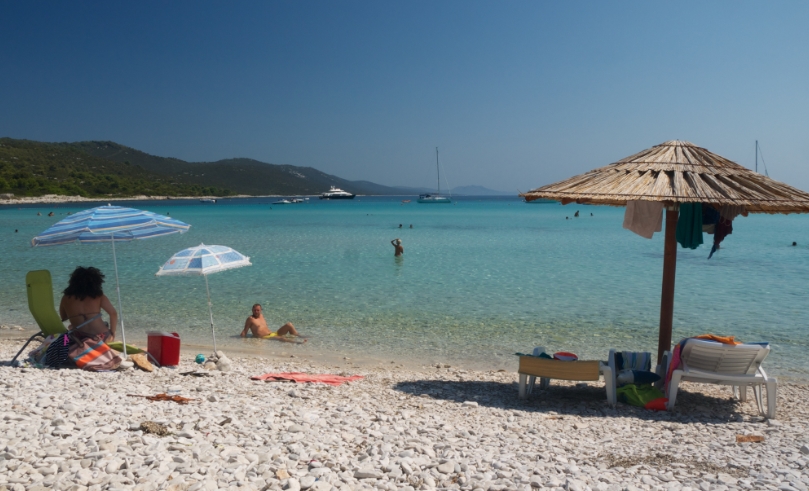
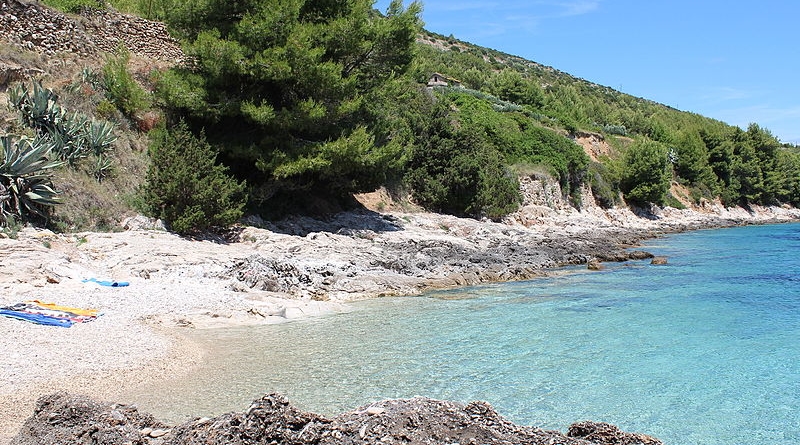
Below Marjan there are also beaches and coves, favourite bathing spots for many residents of Split. The beaches on Marjan are beautiful, clean and well visited. Some of them are Ježinac beach, Zvončac, Kašjuni, Bene beach and others. Apartman JagodaSplitCapacity: 2-4 · To the sea: 20 mfrom 25 € per person / nightView offer
 Apartments SILVA /SplitCapacity: 4-8 · To the sea: 20 mView offer
 Ivona ApartmentsSplitCapacity: 6 · To the sea: 50 mView offer
 Green paradise villaSplitCapacity: 4-11 · To the sea: 1 kmView offer
 Lobster ApartmentsSplitCapacity: 3-23 · To the sea: 400 mfrom 20 € per person / nightView offer
 Split Green Eden & Blue HorizonSplitCapacity: 2-6 · To the sea: 200 mView offer
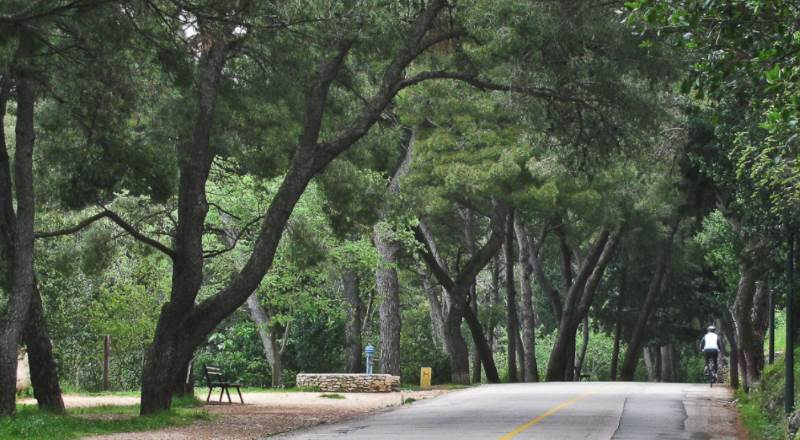
Because of its natural beauty and diversity, Marjan was declared a forest park in 1964. This made the hill in Split protected under the Nature Protection Act of the Republic of Croatia.
The name Marjan is first mentioned in the first half of the eighth century as Marianum. Over the years, however, the name changed, giving rise to the known forms Marulianus, Mergnanus, Murnanus, Marnanus, Murnano, Marnano, Mergnano, Mernjan, Marglian, Mirgnan and Megnan.Today's name arose in the 19th century from the older form Merjan, which is still preserved today among older residents of Split.
A brief look at Marjan hill in Split
We have already covered this, but to briefly frame the story of Marjan. So, Marjan is a hill that rises above Split, with its highest peak at 178 metres. Marjan has always been the most striking part of Split's image. It is rare to experience such harmony between nature and urban life. On one side we have a densely populated city in its full splendour, and on the other a peninsula of almost untouched nature.
It is often also called the Holy Hill, because it conceals many monuments of both sacred and secular architecture. Today these monuments are fused with the natural beauty, forming a symbiosis of historical heritage and natural activity.Many nature lovers come to Marjan. You can climb the hill directly from Split's beautiful and world-famous waterfront promenade. This gives visitors from any corner of the world the chance to experience the beauty of this forest park, its fresh air, and the stunning views of Split and the islands. Marjan also has several viewpoints that complete the experience and offer a beautiful view of certain parts of Split and the sea surrounding this lovely city.
Walkers will certainly enjoy Marjan. The paths are laid out just for them and for that purpose. Every year a great number of guests of all ages stroll along Marjan, both recreational walkers and professional athletes.
Marjan is part of the unmistakable postcard views of this city, and a place from which you can experience Split in its full splendour. If you visit Marjan you will take away completely unusual memories from a densely populated and touristically busy city.
What you can see on Marjan
A considerable number of small churches can be found in the Marjan area, and some of them are truly old and a valuable archaeological asset.
The area of the Split peninsula alone has 40 sacred buildings, and around the Marjan peninsula there are 12 churches.
We will mention a few of the churches on Marjan, starting with the Church of Our Lady of Seven Sorrows. This church is on the southern side of Marjan and was built in the 15th century. At the tip of Marjan, as the westernmost headland is locally called, stands another small church, St George's. The Church of St George has stood on Marjan since as early as the 9th century. A little further west and higher up, beneath sheer cliffs, lies the Church of St Jerome, built in the second half of the 15th century. Inside this church is a relief of St Jerome made by the sculptor Andrija Aleši. Near the little church is the Hermit's Cave, where St Jerome himself is said to have once lived. Besides all the mentioned churches, a little further east on the southern side stands the Bethlehem church, built in the 14th century but later rebuilt and extended several times. The Church of St Nicholas, located at Vidilica, is also very beautiful.
On the northern side of Marjan stands the Church of Our Lady of Spinut. This church is believed to have been built in the early Christian period, but today it shows all the features of a later rebuilding that took place in the Romanesque era. In Bene cove, on Marjan, there once stood the old Croatian Church of St Benedict. Today this church is in ruins, but it still stands there as evidence of a historical period of the city of Split. Its remains were discovered in 2002. It was built in pre-Romanesque style and is dated to the 9th-11th centuries.
There is a great deal of written evidence of other small churches too, but over time they were demolished, and the physical traces of their existence have been lost. Be that as it may, Marjan is worth visiting because there really is a lot to see here. It is a place where nature lovers will feel at home, as will amateur archaeologists and people who love history and historical heritage.
Historical curiosities of Marjan
Few people today know that for a long time Marjan was a refuge for hermits. Yet this is a fact, and historians are well aware of it. It is discussed by Perislav Petrić in his feuilleton, published in Slobodna Dalmacija from 6 to 11 May 2003. We quote that short passage:
"In today's cave of St Jerome there once stood the old oratory of St Cyriacus in spelunca, in grotta, as recorded by Thomas the Archdeacon. Alongside the oratory it is recorded that there was, in the cliffs of the hill, a Kirijelejson, and furthermore this name is identical with St Cyriacus. And the cave further west in the vertical rock face, walled off by the Karepić family in 1523, was also a hermitage. Regarding the hermits or eremites on Marjan, Archbishop Cosmi states at the end of the 17th century that they were the guardians and sacristans of Marjan's churches"
Institutions on Marjan
On Marjan itself, several important institutions are active today. Some of them are known throughout the world, while others are there to serve people who come to Marjan. At the tip of Marjan operates the Institute of Oceanography and Fisheries, founded back in 1930. On the hill itself is the Natural History Museum, which also houses a zoo. It was founded in 1924. Marjan is further enriched by the Meteorological Observatory, which has stood there since 1926. The youngest of them all is MEDILS, the Mediterranean Institute for Life Sciences, which operates on the southern side of Marjan, in the Villa Dalmacija, the so-called Tito's Villa.
Walking on Marjan as a special experience for tourists and the people of Split
Walking or jogging on Marjan is one of the favourite pastimes of Split's residents. Yet this kind of recreation is not reserved exclusively for the local population. On the contrary, locals will gladly direct you towards Marjan and show you the best routes for walking on this hill. The walk usually begins at the Marjan Gate if you are walking the flat section, or at the first viewpoint, from where you can climb towards the zoo or towards Telegrin.
If you are walking the northern part, your route will begin at the northern gate, from where you can walk along the road or along the paved fitness trail. On both routes you pass the first, second and third spring, and after 1800 m you reach the only real resting spot along this route, Bene cove, or Bene for short, as it is more popularly known among locals. In the small cove along the way there is a catering establishment, a few sports grounds and a few pieces of play equipment for the youngest. During summer the cove also has a slide for sliding into the sea, which is reason enough for the cove to be packed with bathers during the summer months. However, if you are still up for walking, we suggest you continue on, along the road towards the far tip of Marjan, a distance of about one kilometre. Along the way you will pass an abandoned naval demagnetisation station, which is still owned by the military.The walk along the southern slopes of Marjan usually begins at the first viewpoint, located at the top of Nazorov prilaz street. From this point you can climb to the second viewpoint via a large paved slope or steps. Right at the start, just by the viewpoint, to the north of the promenade, lies the old Jewish cemetery. At the second viewpoint stands the Church of St Nicholas. After that the path continues towards Sedlo (the Saddle), where you can also see a plaque with verses by Luka Botić. From Sedlo, the path along the southern slopes continues along the Marangunić promenade, passing the Church of St Jerome and the hermit settlements, descending to the ramp beside the Institute of Oceanography and Fisheries.
Below Marjan there are also beaches and coves, favourite bathing spots for many residents of Split. The beaches on Marjan are beautiful, clean and well visited. Some of them are Ježinac beach, Zvončac, Kašjuni, Bene beach and others.
Private accommodation in Split – directly from the owners
All accommodation in Split →Apartman JagodaSplitCapacity: 2-4 · To the sea: 20 mfrom 25 € per person / nightView offerApartments SILVA /SplitCapacity: 4-8 · To the sea: 20 mView offerIvona ApartmentsSplitCapacity: 6 · To the sea: 50 mView offerGreen paradise villaSplitCapacity: 4-11 · To the sea: 1 kmView offerLobster ApartmentsSplitCapacity: 3-23 · To the sea: 400 mfrom 20 € per person / nightView offerSplit Green Eden & Blue HorizonSplitCapacity: 2-6 · To the sea: 200 mView offerFollow us on Facebook for more articles about Croatia. Share this article using the buttons on the right. Thank you!
Upgrade this article
Bio si na ovom mjestu? Podijeli s nama svoja iskustva ili fotografije.
Napiši svoju verziju članka. Nagrađujemo vlasnike apartmana.