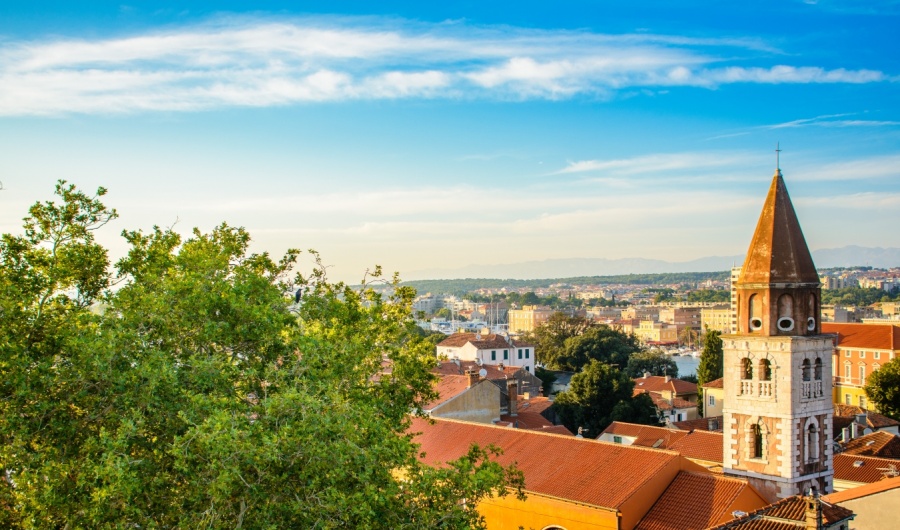

Split is known for its many landmarks and wealth of events. Among Split's buildings, or rather places in the city, we must certainly also mention the Prokurative building project.
The Prokurative, officially Republic Square, is a famous Mediterranean square in the centre of Split. It lies west of Diocletian's Palace and is known as a stage for the city's cultural events beneath Marjan. For almost fifty years now it has also hosted the traditional "Split" popular music festival.
 The construction of this square in Split took place over two periods.
The first took place from 1863 to 1867, when Mayor Dr Bajamonti wanted to turn Split into the City of the Future. It was precisely with this goal that he invested his efforts in building and improving Split, so as to turn a neglected provincial town into a small, advanced European city.
Guided by the motto „To will is to be able“, as soon as he took office as municipal mayor he set about realising his plans. For this purpose he founded the society "Associazione dalmatica" (Dalmatian Association).
A theatre building – erected on Marmont's green – formed the backbone of the future Prokurative complex. The "Teatro Bajamonti" was solemnly opened on 27 December 1859. Bajamonti's further plan was to build two wings, a complex called the Prokurative after the famous Venetian Procuratie.
Unfortunately, on 15 May 1882 Bajamonti's theatre was destroyed by fire. The building was also damaged, and although it was later rebuilt, it was not restored to its original form.
Between 1863 and 1867 the complex's west wing was built in Neo-Renaissance style, to the design of architect G. B. Meduna.
In 1899 a fence of stone posts, made back in Bajamonti's time, was erected on the south side of Marmont's green. In 1905 the west wing was renovated, and on that occasion cement mascarons and friezes were added.
The second building period took place between 1909 and 1928, with the start of construction of the Prokurative's east wing.
Construction of the Prokurative's east wing began in 1909, but this project, too, took place in two stages: from 1909 to 1911 and from 1927 to 1928.
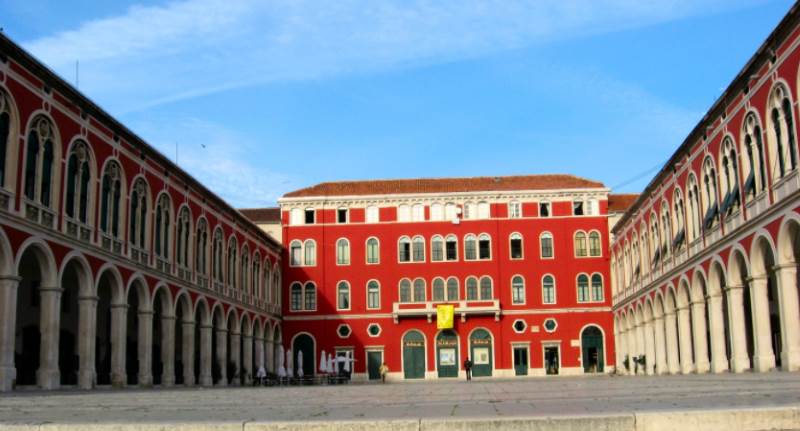
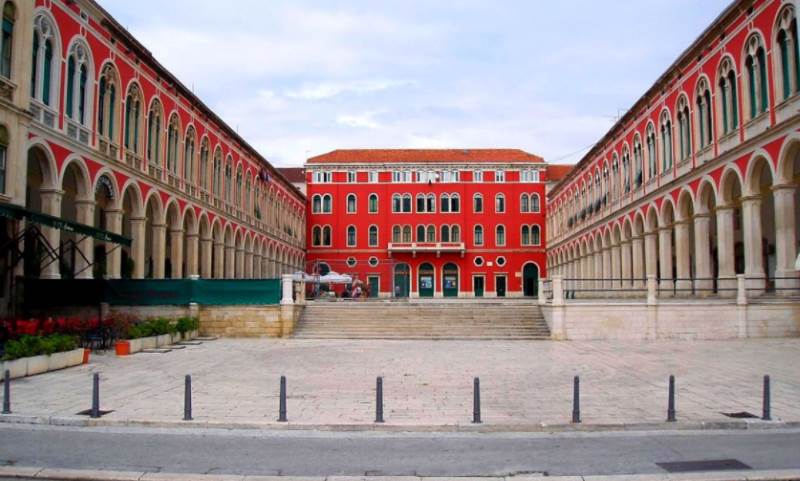
Today this square remains one of the most beautiful in Split. It is a place that many visit and happily come to see. The colourful façades surrounding its central area give a true impression of its historic look and of the effort invested in turning Split into the city it is today.
If you want to learn more about the square, enjoy its details and picture yourself in that historic moment – visit Split and come to the square. You will get the best experience by coming to this place and seeing the buildings in their full beauty for yourself.
Until then, read these brief notes – where the square is located, when it was built, and what significant moments it has experienced throughout its history.
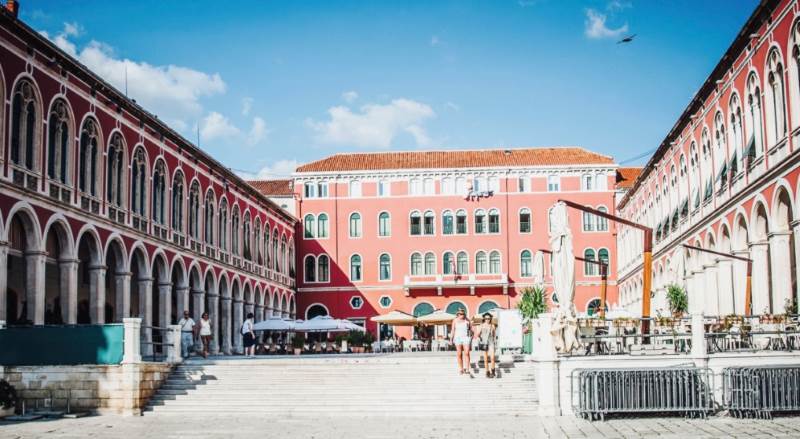 The Prokurative form a large square located west of the Riva; resembling Venice's St Mark's Square, it is bordered on three sides by Neo-Renaissance buildings with arcades, from which the square takes its name. The square is open only towards the south, offering a beautiful view of the harbour and the Riva. Today it is a favourite gathering place for many of Split's residents, as well as for visitors to this Dalmatian city.
The building of the Prokurative was initiated in the mid-19th century by one of the most famous mayors in the city's history, Antonio Bajamonti. He wanted to show that Split, in its very being, drew on Italian traditions. This is how the square came to have a colonnade resembling Venice's, and reliefs above the windows evoking ancient and Renaissance influences. Bajamonti also built his great theatre on the square, which was later destroyed by fire.
The square has long been established as an excellent stage for cultural events, especially the popular music festival. The nearby cafés and restaurants have made it a popular gathering place for the people of Split. Also part of the Prokurative is the plateau to the south of them, where a large neoclassical fountain stood until 1947. The fountain was destroyed by the communist authorities, due to its alleged association with Italian rule in Split and Dalmatia.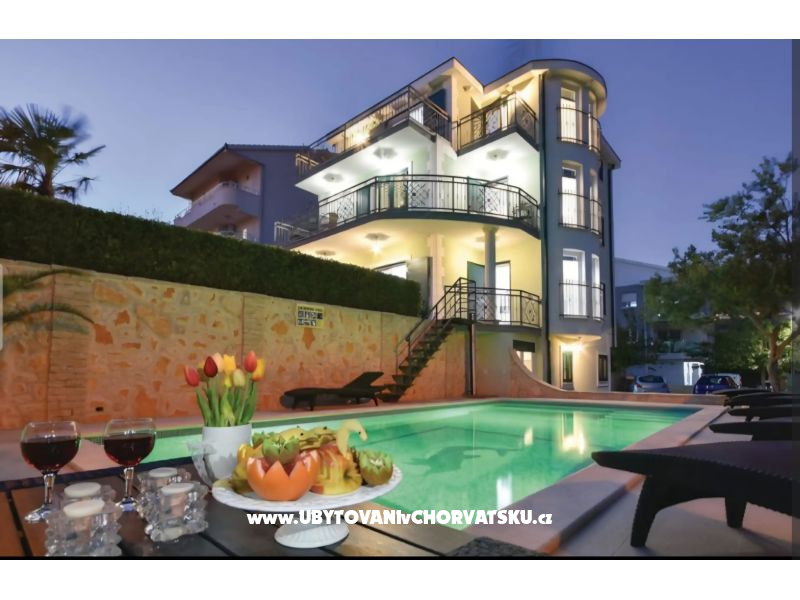 Green paradise villaSplitCapacity: 4-11 · To the sea: 1 kmView offer
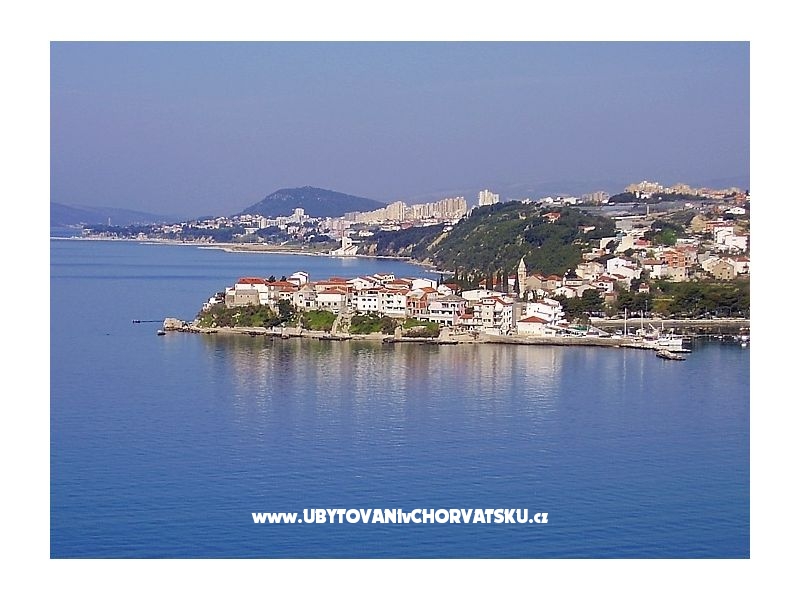 Apartman JagodaSplitCapacity: 2-4 · To the sea: 20 mfrom 25 € per person / nightView offer
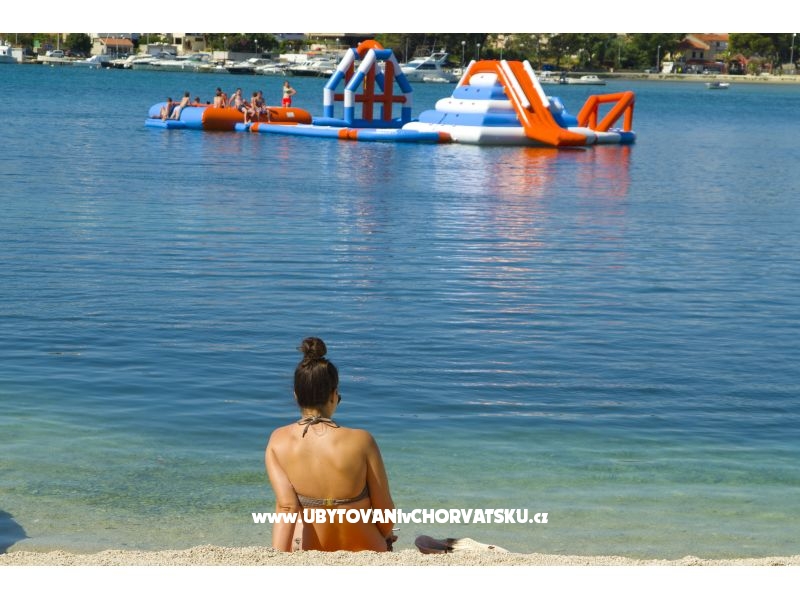 Apartman AnicaSplitCapacity: 4 · To the sea: 200 mfrom 20 € per person / nightView offer
 Lobster ApartmentsSplitCapacity: 3-23 · To the sea: 400 mfrom 20 € per person / nightView offer
 Apartman PujankeSplitCapacity: 2-5 · To the sea: 1 kmView offer
 Split Green Eden & Blue HorizonSplitCapacity: 2-6 · To the sea: 200 mView offer
Built in two stages
The construction of this square in Split took place over two periods.The first took place from 1863 to 1867, when Mayor Dr Bajamonti wanted to turn Split into the City of the Future. It was precisely with this goal that he invested his efforts in building and improving Split, so as to turn a neglected provincial town into a small, advanced European city.
Guided by the motto „To will is to be able“, as soon as he took office as municipal mayor he set about realising his plans. For this purpose he founded the society "Associazione dalmatica" (Dalmatian Association).
A theatre building – erected on Marmont's green – formed the backbone of the future Prokurative complex. The "Teatro Bajamonti" was solemnly opened on 27 December 1859. Bajamonti's further plan was to build two wings, a complex called the Prokurative after the famous Venetian Procuratie.
Unfortunately, on 15 May 1882 Bajamonti's theatre was destroyed by fire. The building was also damaged, and although it was later rebuilt, it was not restored to its original form.
Between 1863 and 1867 the complex's west wing was built in Neo-Renaissance style, to the design of architect G. B. Meduna.
In 1899 a fence of stone posts, made back in Bajamonti's time, was erected on the south side of Marmont's green. In 1905 the west wing was renovated, and on that occasion cement mascarons and friezes were added.
The second building period took place between 1909 and 1928, with the start of construction of the Prokurative's east wing.
Construction of the Prokurative's east wing began in 1909, but this project, too, took place in two stages: from 1909 to 1911 and from 1927 to 1928.
Today this square remains one of the most beautiful in Split. It is a place that many visit and happily come to see. The colourful façades surrounding its central area give a true impression of its historic look and of the effort invested in turning Split into the city it is today.
Prokurative Square in brief
If you want to learn more about the square, enjoy its details and picture yourself in that historic moment – visit Split and come to the square. You will get the best experience by coming to this place and seeing the buildings in their full beauty for yourself.
Until then, read these brief notes – where the square is located, when it was built, and what significant moments it has experienced throughout its history.
The Prokurative form a large square located west of the Riva; resembling Venice's St Mark's Square, it is bordered on three sides by Neo-Renaissance buildings with arcades, from which the square takes its name. The square is open only towards the south, offering a beautiful view of the harbour and the Riva. Today it is a favourite gathering place for many of Split's residents, as well as for visitors to this Dalmatian city.The building of the Prokurative was initiated in the mid-19th century by one of the most famous mayors in the city's history, Antonio Bajamonti. He wanted to show that Split, in its very being, drew on Italian traditions. This is how the square came to have a colonnade resembling Venice's, and reliefs above the windows evoking ancient and Renaissance influences. Bajamonti also built his great theatre on the square, which was later destroyed by fire.
The square has long been established as an excellent stage for cultural events, especially the popular music festival. The nearby cafés and restaurants have made it a popular gathering place for the people of Split. Also part of the Prokurative is the plateau to the south of them, where a large neoclassical fountain stood until 1947. The fountain was destroyed by the communist authorities, due to its alleged association with Italian rule in Split and Dalmatia.
Private accommodation in Split – directly from the owners
All accommodation in Split →Green paradise villaSplitCapacity: 4-11 · To the sea: 1 kmView offerApartman JagodaSplitCapacity: 2-4 · To the sea: 20 mfrom 25 € per person / nightView offerApartman AnicaSplitCapacity: 4 · To the sea: 200 mfrom 20 € per person / nightView offerLobster ApartmentsSplitCapacity: 3-23 · To the sea: 400 mfrom 20 € per person / nightView offerApartman PujankeSplitCapacity: 2-5 · To the sea: 1 kmView offerSplit Green Eden & Blue HorizonSplitCapacity: 2-6 · To the sea: 200 mView offerFollow us on Facebook for more articles about Croatia. Share this article using the buttons on the right. Thank you!
Upgrade this article
Bio si na ovom mjestu? Podijeli s nama svoja iskustva ili fotografije.
Napiši svoju verziju članka. Nagrađujemo vlasnike apartmana.