
Biokovo Nature Park is one of the better-known nature parks in Croatia. The Republic of Croatia has 11 registered nature parks, and Biokovo Nature Park is one of them.
The boundaries of this park cover the area of the mountain massif of the same name – Biokovo.
It is worth mentioning that the area was declared a park (Biokovo) in 1981, with a total area of almost 200 square kilometres. The highest peak in the park (of this mountain massif) is Sveti Jure, at an altitude of 1,762 metres. The peak of Sveti Jure is also the highest peak of Mount Biokovo, and the third highest peak in Croatia.
Biokovo is adorned with a distinctive karst relief and a well-preserved, isolated natural environment. Within the park there are caves and pits, which are especially interesting to researchers and nature-loving adventurers.
To highlight some of the interesting features of Biokovo Park, we can mention:
The Amfora Pit, with a depth of -788 m
The Mokre Noge Pit, with a depth of -842 metres, which is also the deepest pit in the area
Endemic plant and animal species
Significant palaeontological sites
Biokovo Nature Park is visited by around 50,000 tourists a year. The park is especially interesting to nature lovers, adventurers, and of course researchers, biologists, and other interest groups engaged in similar kinds of research. Biokovo is a natural environment in which we witness the evolution and emergence of plant and animal species that cannot be found anywhere else.
The mountain itself is located right by the sea, and in fact forms a natural barrier between the Adriatic climate and continental climate changes. The main feature of the mountain is its imposing height and steep rise from the coastal side. Only the far end of the mountain, i.e. its foothills at a height of around 300 metres, has a gentle slope towards the sea, and it is in this part that many towns have developed, which today are significant for the overall summer tourism of Croatia.
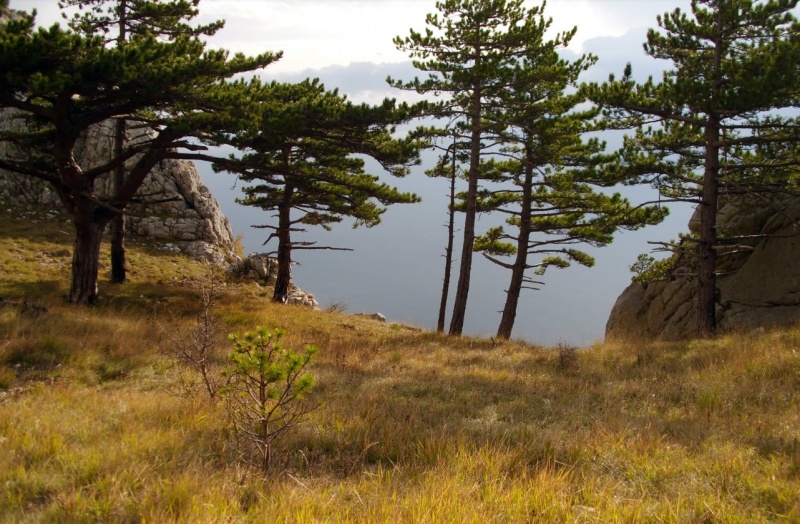
In the park, that is, in the area of this mountain massif, plant species that are specially adapted to steep, karst and barren terrain predominate. Today we know of numerous endemic plants, which are a special part of the natural wealth of the park itself. The park also has native forests of Dalmatian black pine. Among the aforementioned trees there also grows a specially protected tree called the „Miletin Pine“.
Besides endemic species, some endangered plant species also grow on Biokovo. Among them, we can mention the large-flowered mouse-ear, the red scabious, the three-ridged silverbush, the small red orchid, Portenschlag's bellflower, the blue grape hyacinth and some others. In the park area, over 1,500 plant species have been recorded, which says enough about its diversity.
As many as 40 species of endemic plants live in the Biokovo area. Some of them are the dwarf bellflower and the creeping bellflower.
At first glance, the mountain seems barren and desolate, without much life on it. Nevertheless, many animal species have been found in the Biokovo area. Among them are also some endemic species, among which perhaps the best known is the endemic Molops bucephalis (a ground beetle).
By 2002, biologists had recorded as many as 221 species of butterfly. Among them is the globally endangered small blue, and the endemic Dalmatian ringlet.
A large number of endemic animal species are found in the underground fauna. Scientists have found a large number of cave-dwelling organisms, around 120 species, which inhabit numerous caves and pits. A large proportion of these species (around half) are classified as endemic species that cannot be found anywhere else.
It is interesting to mention that Biokovo has no permanent lakes. Nevertheless, karst springs and underground waters are present. In the smaller and larger pools and rock cavities, we can find various species of amphibians, among which the fire salamander, the smooth newt, the yellow-bellied toad, the large green frog and the European tree frog stand out.
The park area is known for a large number of different species of snakes. Some of the protected snake species in the park are: the whip snake, the red-capped snake, the 'kravosas' snake, the spotted field snake, the awl snake, the Aesculapian snake, the dragon snake, the black-patch snake and the grass snake. Among the better-known venomous snakes, the nose-horned viper stands out. Other reptiles that live here are: the slow worm, and lizards; the common lizard, the wall lizard and the Dalmatian wall lizard.
Some rare and endangered bird species nest on the steep cliffs of the mountain. Here we can find species such as: the short-toed snake eagle, the golden eagle and the lesser kestrel, that is, bird species that are strictly protected under the Bern Convention.
The black-winged wheatear (coastal white-rump) nests in areas higher than 1,400 metres above sea level, while the common wheatear (greyish white-rump) inhabits somewhat lower areas, specifically at altitudes between 750 and 1,350 metres above sea level. The most common bird on the mountain is the Alpine chough (yellow-billed chough).
A large number of bats also live in the park area. It is interesting to mention that there are 13 species, and each of them is protected. Bats in Biokovo Park: the greater horseshoe bat, the lesser horseshoe bat, the Mediterranean horseshoe bat, the white-margined bat, Savi's pipistrelle, the coastal bat, the serotine bat, the Mediterranean free-tailed bat and some others.
Among other mammals, the forest shrew and the pygmy shrew live at higher altitudes. The European hare is widespread throughout the park area. It is especially worth mentioning the species – the Dinaric vole, which is specially protected under the Ordinance on the Protection of Certain Mammal Species and is found in the Red Book of Animal Taxa of the Republic of Croatia.
Another endemic subspecies is the karst dormouse, which is likewise protected, just like the Dinaric vole.
Among the predators, we can mention the wolf, the fox, the weasel, the pine marten, the beech marten, the badger and some others.
In 1964, the Balkan chamois was reintroduced to Biokovo, and in 1968 so was the mouflon. Both species are protected, and to this day a healthy population growth of these species, as well as of wild boar, has been recorded.
We have mentioned that the mountain, and Biokovo Nature Park itself, is visited by up to 50,000 tourists a year. To a large extent, these are people who truly enjoy natural beauty and untouched landscapes.
Besides „civilian“ tourists, the park itself is visited by researchers from almost every field of research. Many endemic species of flora and fauna, as well as the natural setting and karst landscape of the park, literally invite exploration and discovery.
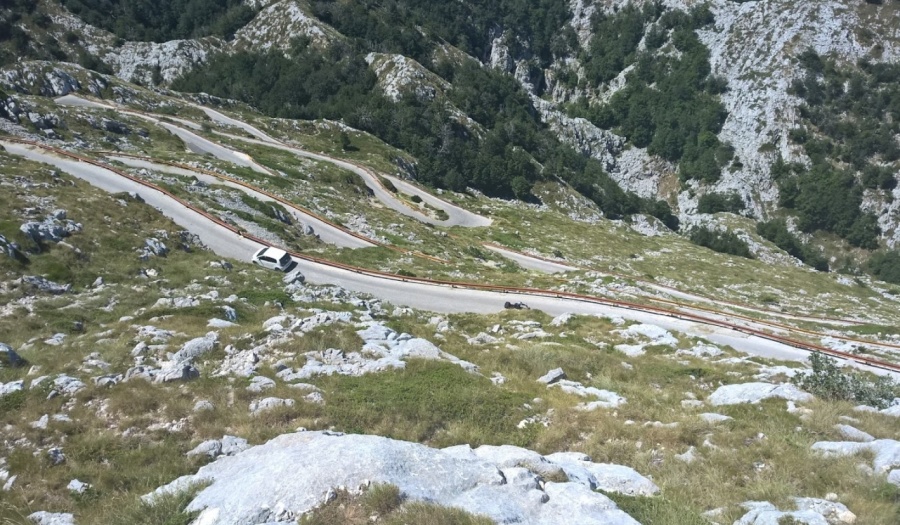
Nevertheless, due to its protected status and great tourist interest, the park often tends to get crowded. The road leading to the summit is often, during the season, crowded with cars, which makes access difficult. According to the park's rules, there must not be more than 80 vehicles on the road at any one time. An additional problem for visitors is the fact that the road is very narrow, which makes passing difficult, although passing bays have been built in some places.
Along the road to the summit there are several restaurants, which operate during the season, and can host anyone wishing to enjoy food and drink while taking in the view from above. A side road leads to the Vošac peak above Makarska. This is also the most popular excursion spot on Biokovo.
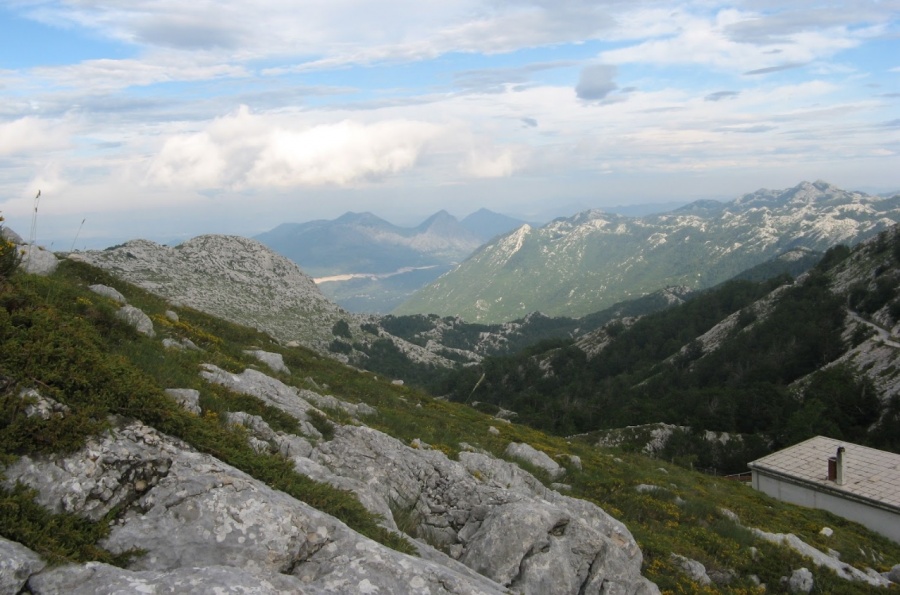
Biokovo Nature Park is a magnificent mountain massif, distinctive for its karst peaks, unforgettable viewpoints, biological diversity and botanical garden. Biokovo was declared a nature park in 1981, and is part of the Dinaric Alps mountain massif. It is characterised by steep, high peaks, which in turn descend gently all the way to the beautiful Adriatic Sea and the local settlements, the most significant of which is the town of Makarska.
Biokovo covers an area of 196 km² and within this area lies the highest peak, Sveti Jure, 1,762 metres high, the Mokre Noge pit (-832 m), as well as various other caves, ice caves and
palaeontological sites.
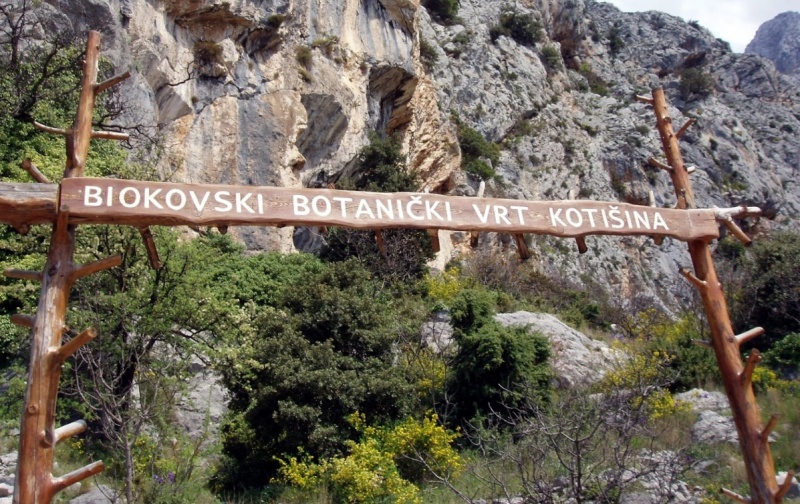
Biokovo is also special for its 40 endemic plant species, of which the best known is the Biokovo bellflower (Edraianthus pumilio), and for plant lovers it is also significant that Biokovo is home to more than 1,500 plant species. There is also a special Kotišina Botanical Garden, founded by Friar Jure Radić for the scientific study and protection of local plants. This botanical garden is unusual in that the plants are not arranged according to strict rules, nor are they separated by artificial barriers. Instead, on an area of 16.5 ha, a fenced and protected space has been created where self-seeded, but mostly endemic and unique, plant species grow.
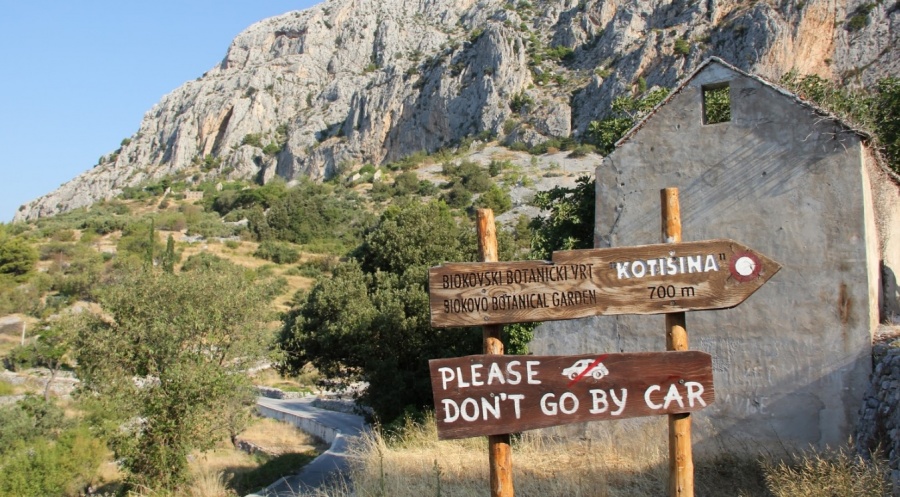
The Kotišina Botanical Garden of Biokovo is a garden of self-seeded Biokovo plants, as well as naturalised species from other areas. It is located in the most beautiful part of untouched nature, on the coastal spurs of Mount Biokovo above the village of Kotišina, and is an integral part of Biokovo Nature Park. It covers an area of 16.5 ha, and lies at an altitude of 35–500 m.
As for the rich animal world, Biokovo does not fall short here either. Numerous caves, crevices and underground waters contain a rich animal world in which there are many endemic species, such as the fire salamander, the smooth newt, some species of frogs such as the large green frog and the European tree frog, snakes such as the red-capped snake and the whip snake, eagles such as the short-toed snake eagle and the golden eagle, and some species of butterfly.
As for tourism, Biokovo is visited by around 50,000 people a year. The number of visitors is not particularly large, but this allows for the preservation of the local flora and fauna, as well as a peaceful visit for those who want one. The Biokovo road leads up to the summit of Biokovo, along which there are also several restaurants and hiking trails.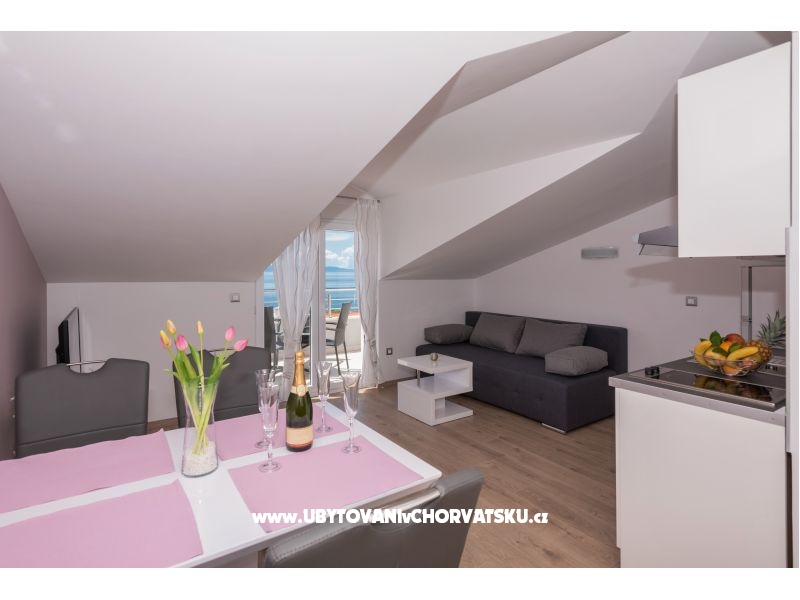 Apartments VujcicMakarskaCapacity: 2-22 · To the sea: 600 mfrom 15 € per person / nightView offer
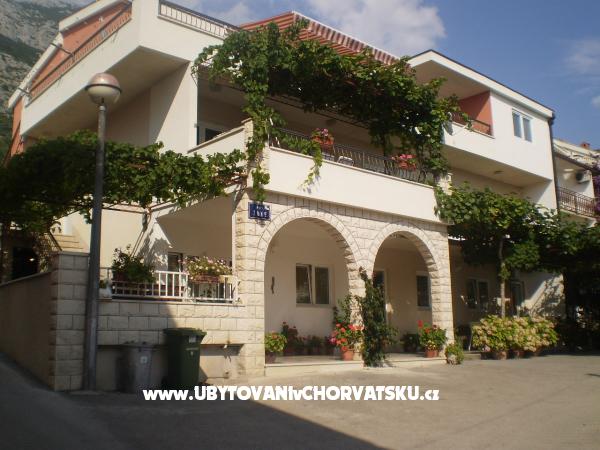 Apartmani Roso m&mMakarskaCapacity: 2-20 · To the sea: 750 mfrom 10 € per person / nightView offer
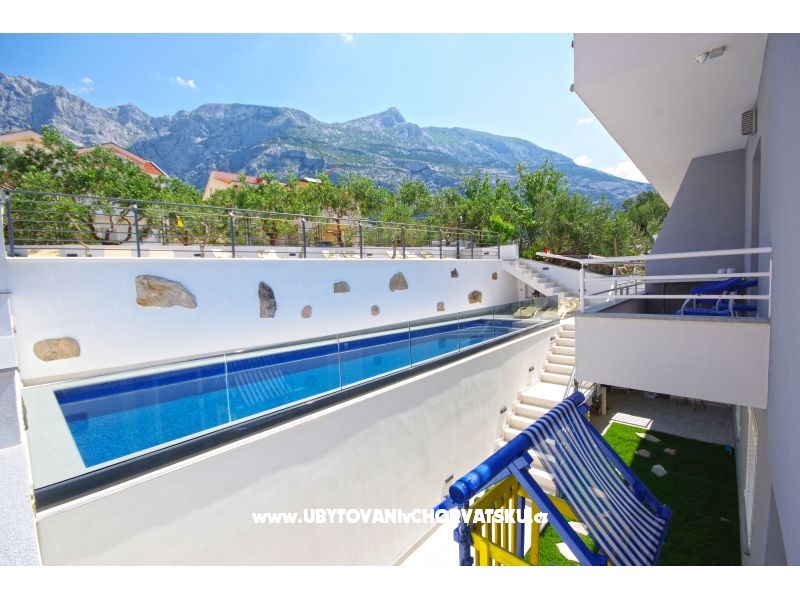 Apartments MakarskaMakarskaCapacity: 2-30 · To the sea: 440 mfrom 10 € per person / nightView offer
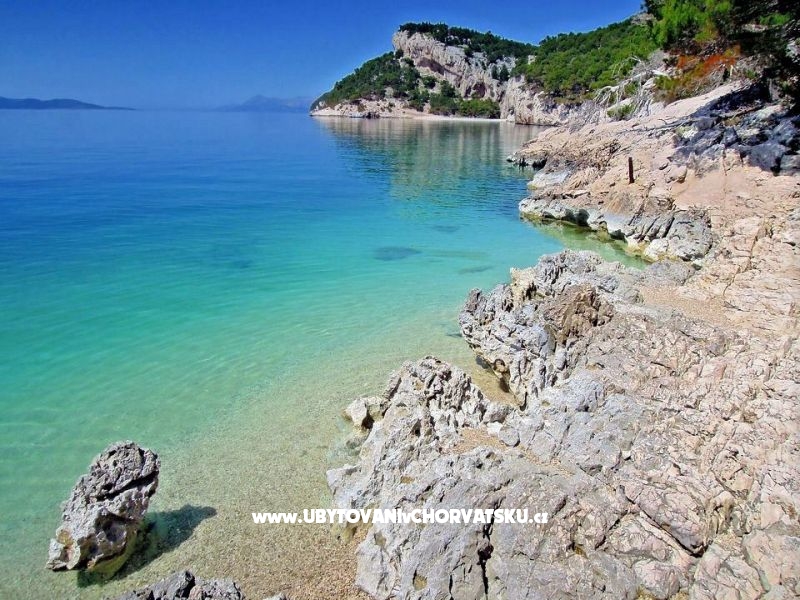 Vila VentusMakarskaTo the sea: 400 mfrom 9 € per person / nightView offer
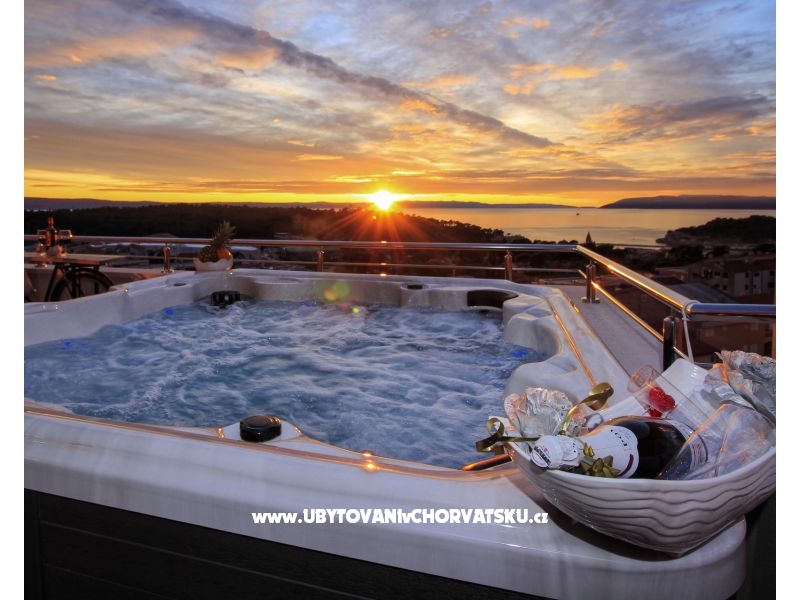 Lux penthouseMakarskaCapacity: 4-8 · To the sea: 650 mfrom 30 € per person / nightView offer
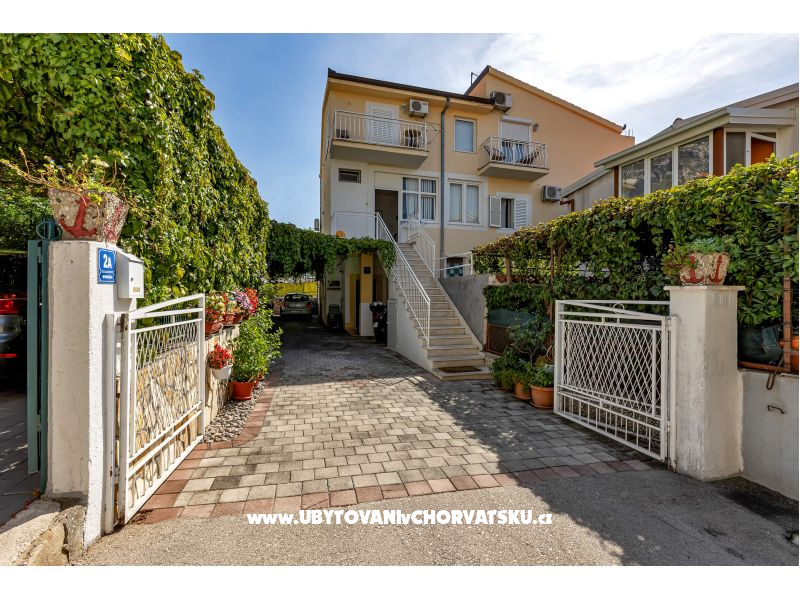 Rosalia ApartmentsMakarskaCapacity: 2-14 · To the sea: 350 mView offer
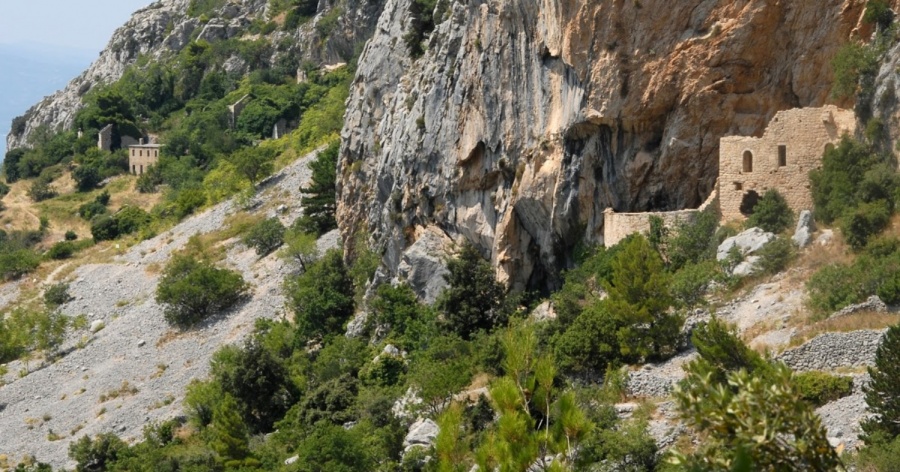
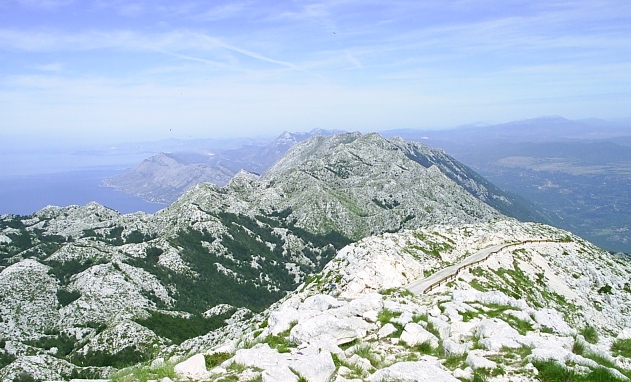
The boundaries of this park cover the area of the mountain massif of the same name – Biokovo.
Biokovo Nature Park
It is worth mentioning that the area was declared a park (Biokovo) in 1981, with a total area of almost 200 square kilometres. The highest peak in the park (of this mountain massif) is Sveti Jure, at an altitude of 1,762 metres. The peak of Sveti Jure is also the highest peak of Mount Biokovo, and the third highest peak in Croatia.
Biokovo is adorned with a distinctive karst relief and a well-preserved, isolated natural environment. Within the park there are caves and pits, which are especially interesting to researchers and nature-loving adventurers.
To highlight some of the interesting features of Biokovo Park, we can mention:
The Amfora Pit, with a depth of -788 m
The Mokre Noge Pit, with a depth of -842 metres, which is also the deepest pit in the area
Endemic plant and animal species
Significant palaeontological sites
Tourism and attractions in Biokovo Nature Park
Biokovo Nature Park is visited by around 50,000 tourists a year. The park is especially interesting to nature lovers, adventurers, and of course researchers, biologists, and other interest groups engaged in similar kinds of research. Biokovo is a natural environment in which we witness the evolution and emergence of plant and animal species that cannot be found anywhere else.
The mountain itself is located right by the sea, and in fact forms a natural barrier between the Adriatic climate and continental climate changes. The main feature of the mountain is its imposing height and steep rise from the coastal side. Only the far end of the mountain, i.e. its foothills at a height of around 300 metres, has a gentle slope towards the sea, and it is in this part that many towns have developed, which today are significant for the overall summer tourism of Croatia.
Plant species in Biokovo Nature Park
In the park, that is, in the area of this mountain massif, plant species that are specially adapted to steep, karst and barren terrain predominate. Today we know of numerous endemic plants, which are a special part of the natural wealth of the park itself. The park also has native forests of Dalmatian black pine. Among the aforementioned trees there also grows a specially protected tree called the „Miletin Pine“.
Besides endemic species, some endangered plant species also grow on Biokovo. Among them, we can mention the large-flowered mouse-ear, the red scabious, the three-ridged silverbush, the small red orchid, Portenschlag's bellflower, the blue grape hyacinth and some others. In the park area, over 1,500 plant species have been recorded, which says enough about its diversity.
As many as 40 species of endemic plants live in the Biokovo area. Some of them are the dwarf bellflower and the creeping bellflower.
Animal species of Biokovo Nature Park
At first glance, the mountain seems barren and desolate, without much life on it. Nevertheless, many animal species have been found in the Biokovo area. Among them are also some endemic species, among which perhaps the best known is the endemic Molops bucephalis (a ground beetle).
By 2002, biologists had recorded as many as 221 species of butterfly. Among them is the globally endangered small blue, and the endemic Dalmatian ringlet.
A large number of endemic animal species are found in the underground fauna. Scientists have found a large number of cave-dwelling organisms, around 120 species, which inhabit numerous caves and pits. A large proportion of these species (around half) are classified as endemic species that cannot be found anywhere else.
It is interesting to mention that Biokovo has no permanent lakes. Nevertheless, karst springs and underground waters are present. In the smaller and larger pools and rock cavities, we can find various species of amphibians, among which the fire salamander, the smooth newt, the yellow-bellied toad, the large green frog and the European tree frog stand out.
The park area is known for a large number of different species of snakes. Some of the protected snake species in the park are: the whip snake, the red-capped snake, the 'kravosas' snake, the spotted field snake, the awl snake, the Aesculapian snake, the dragon snake, the black-patch snake and the grass snake. Among the better-known venomous snakes, the nose-horned viper stands out. Other reptiles that live here are: the slow worm, and lizards; the common lizard, the wall lizard and the Dalmatian wall lizard.
Some rare and endangered bird species nest on the steep cliffs of the mountain. Here we can find species such as: the short-toed snake eagle, the golden eagle and the lesser kestrel, that is, bird species that are strictly protected under the Bern Convention.
The black-winged wheatear (coastal white-rump) nests in areas higher than 1,400 metres above sea level, while the common wheatear (greyish white-rump) inhabits somewhat lower areas, specifically at altitudes between 750 and 1,350 metres above sea level. The most common bird on the mountain is the Alpine chough (yellow-billed chough).
A large number of bats also live in the park area. It is interesting to mention that there are 13 species, and each of them is protected. Bats in Biokovo Park: the greater horseshoe bat, the lesser horseshoe bat, the Mediterranean horseshoe bat, the white-margined bat, Savi's pipistrelle, the coastal bat, the serotine bat, the Mediterranean free-tailed bat and some others.
Among other mammals, the forest shrew and the pygmy shrew live at higher altitudes. The European hare is widespread throughout the park area. It is especially worth mentioning the species – the Dinaric vole, which is specially protected under the Ordinance on the Protection of Certain Mammal Species and is found in the Red Book of Animal Taxa of the Republic of Croatia.
Another endemic subspecies is the karst dormouse, which is likewise protected, just like the Dinaric vole.
Among the predators, we can mention the wolf, the fox, the weasel, the pine marten, the beech marten, the badger and some others.
In 1964, the Balkan chamois was reintroduced to Biokovo, and in 1968 so was the mouflon. Both species are protected, and to this day a healthy population growth of these species, as well as of wild boar, has been recorded.
Tourism and attractions on Biokovo
We have mentioned that the mountain, and Biokovo Nature Park itself, is visited by up to 50,000 tourists a year. To a large extent, these are people who truly enjoy natural beauty and untouched landscapes.
Besides „civilian“ tourists, the park itself is visited by researchers from almost every field of research. Many endemic species of flora and fauna, as well as the natural setting and karst landscape of the park, literally invite exploration and discovery.
Nevertheless, due to its protected status and great tourist interest, the park often tends to get crowded. The road leading to the summit is often, during the season, crowded with cars, which makes access difficult. According to the park's rules, there must not be more than 80 vehicles on the road at any one time. An additional problem for visitors is the fact that the road is very narrow, which makes passing difficult, although passing bays have been built in some places.
Along the road to the summit there are several restaurants, which operate during the season, and can host anyone wishing to enjoy food and drink while taking in the view from above. A side road leads to the Vošac peak above Makarska. This is also the most popular excursion spot on Biokovo.
Briefly about the park – Biokovo
Biokovo Nature Park is a magnificent mountain massif, distinctive for its karst peaks, unforgettable viewpoints, biological diversity and botanical garden. Biokovo was declared a nature park in 1981, and is part of the Dinaric Alps mountain massif. It is characterised by steep, high peaks, which in turn descend gently all the way to the beautiful Adriatic Sea and the local settlements, the most significant of which is the town of Makarska.
Biokovo covers an area of 196 km² and within this area lies the highest peak, Sveti Jure, 1,762 metres high, the Mokre Noge pit (-832 m), as well as various other caves, ice caves and
palaeontological sites.
Biokovo is also special for its 40 endemic plant species, of which the best known is the Biokovo bellflower (Edraianthus pumilio), and for plant lovers it is also significant that Biokovo is home to more than 1,500 plant species. There is also a special Kotišina Botanical Garden, founded by Friar Jure Radić for the scientific study and protection of local plants. This botanical garden is unusual in that the plants are not arranged according to strict rules, nor are they separated by artificial barriers. Instead, on an area of 16.5 ha, a fenced and protected space has been created where self-seeded, but mostly endemic and unique, plant species grow.
Kotišina Botanical Garden, Biokovo
The Kotišina Botanical Garden of Biokovo is a garden of self-seeded Biokovo plants, as well as naturalised species from other areas. It is located in the most beautiful part of untouched nature, on the coastal spurs of Mount Biokovo above the village of Kotišina, and is an integral part of Biokovo Nature Park. It covers an area of 16.5 ha, and lies at an altitude of 35–500 m.
As for the rich animal world, Biokovo does not fall short here either. Numerous caves, crevices and underground waters contain a rich animal world in which there are many endemic species, such as the fire salamander, the smooth newt, some species of frogs such as the large green frog and the European tree frog, snakes such as the red-capped snake and the whip snake, eagles such as the short-toed snake eagle and the golden eagle, and some species of butterfly.
As for tourism, Biokovo is visited by around 50,000 people a year. The number of visitors is not particularly large, but this allows for the preservation of the local flora and fauna, as well as a peaceful visit for those who want one. The Biokovo road leads up to the summit of Biokovo, along which there are also several restaurants and hiking trails.
Private accommodation in Makarska – directly from the owners
All accommodation in Makarska →Apartments VujcicMakarskaCapacity: 2-22 · To the sea: 600 mfrom 15 € per person / nightView offerApartmani Roso m&mMakarskaCapacity: 2-20 · To the sea: 750 mfrom 10 € per person / nightView offerApartments MakarskaMakarskaCapacity: 2-30 · To the sea: 440 mfrom 10 € per person / nightView offerVila VentusMakarskaTo the sea: 400 mfrom 9 € per person / nightView offerLux penthouseMakarskaCapacity: 4-8 · To the sea: 650 mfrom 30 € per person / nightView offerRosalia ApartmentsMakarskaCapacity: 2-14 · To the sea: 350 mView offerFollow us on Facebook for more articles about Croatia. Share this article using the buttons on the right. Thank you!

Upgrade this article
Bio si na ovom mjestu? Podijeli s nama svoja iskustva ili fotografije.
Napiši svoju verziju članka. Nagrađujemo vlasnike apartmana.