

We made an effort to write about specific locations in Croatia that have attracted the most interest from tourists. In fact, these are places that more than half of the tourists visiting our country ask about.
The publication was printed in 1000 copies, and its aim is to attract tourists interested in cultural and historical offerings. It was printed in Croatian and English.
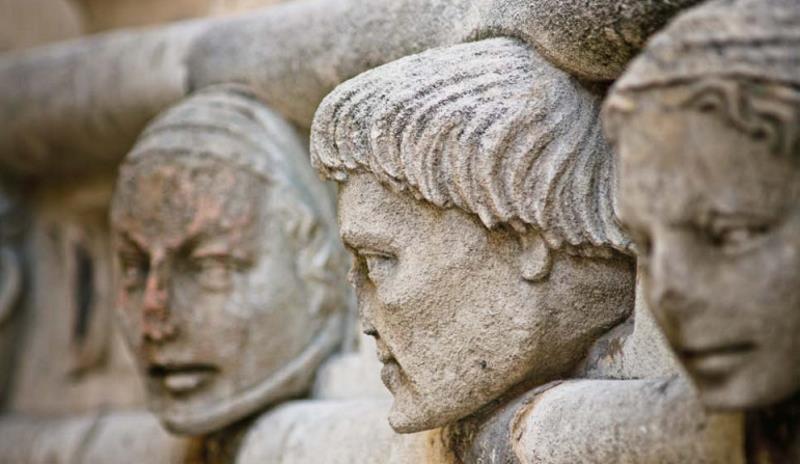 The publication contains a very extensive and rich tourist guide to popular tourist towns in Croatia. In it you will find many interesting facts about towns such as: Poreč, Šibenik, Trogir, Split, Hvar, Dubrovnik and Pula. There are, of course, also descriptions of Brijuni National Park, and Kvarner with its towns and the islands belonging to it.
If you have been searching the internet for Rijeka and Krk, Lošinj and Cres, Nin, Zadar, Solin and Vid, as well as Krapina or Zagreb, you can find all of that in the printed edition we mentioned at the beginning of the story.
The publication was issued by the Ministry of Tourism in cooperation with the Archaeological Museum and experts. It is very informative and reveals, in a special way, the historical and cultural truths of Croatian towns and nearby places.
If you have used search engines in the hope of finding all the details about the aforementioned towns and the places belonging to them, this guide might be just right for you. Find out first-hand what you can see in Rijeka, on the island of Krk, or in Poreč. Explore Šibenik, Trogir and Split, and of course other towns rich in history.
This is a guide containing the TOP 20 archaeological destinations in Croatia. On more than 100 pages, it describes interesting locations and location markers with directions on how to reach them, as well as recommendations for events, travel agencies and cultural institutions in those places.
The guide was printed in 1000 copies in Croatian and English, but it can also be downloaded as a finished document from this link.
The aim of this publication is to attract tourists interested in cultural and historical offerings. According to the data available when the publication was being prepared, such tourists make up half of all tourists in the world.
The purpose of the guide is to point out the best archaeological sites open to tourists. It was made in such a way that, with the help of available data, it was explored what our guests are most interested in, what they ask about and what they would like to visit. With that in mind, the sites were chosen that can best represent the history of Croatia as well as the culture of our beautiful homeland. The aim is also to highlight the richness of the archaeological heritage and to interest visitors in further exploration.
The publication of the guide was prompted by the fact that archaeological tourism is gaining importance in the world, and tourists interested in this topic like to visit Mediterranean countries. This is supported by data showing that Italy's archaeological attractions and museums are visited by 38 million tourists a year, Greece's by 14 million, and Turkey's by 10 million guests.
Croatia is visited by no fewer than 5 million tourists, but the aim is to increase that number. With the goal of increasing the number of guests, we want to bring the quality of the offer up to an enviable level. Besides the many who decide to come to swim and sunbathe on the beautiful beaches, Croatia is visited by a very large number of guests who want to learn about the history of the place where they are staying and see its cultural landmarks.
If we are writing about historical monuments and cultural heritage, then some of them should certainly be mentioned.
It is located in front of the Church of St Donatus and the Archbishop's Palace. This is the largest Roman forumon the eastern side of the Adriatic, and also the best preserved in Croatia. It was founded by Emperor Augustus, mentioned in an inscription as Parens coloniae. It represents a highly developed example of a forum complex, and is one of the most important among the ancient Adriatic towns. An inscription bearing the name of Augustus's proconsul for Illyricum, Tamphilus Vala, carved on the Forum's well, testifies that construction of the complex began as early as the second decade of the 1st century BC, with its final appearance achieved through reconstruction in the 3rd century AD.
Salona is known as the centre of ancient Dalmatia, and is located about 6 km from Split, in present-day Solin. As the capital of the Roman province of Dalmatia, Salona was originally a port of the Illyrian Delmatae, which the Romans conquered towards the end of the 2nd century BC. You can find out more interesting details if you read the guide, or if you visit Solin.
The first hilltop settlement in the area of present-day Pula arose 3000 years ago. Historical records mention the town of Pula as early as the 1st century BC. Under Roman rule, Pula experienced great growth. Pula is the largest and most significant town of Istria in antiquity, founded in 46–45 BC, during the dictatorship of Caesar, on the site of an older Histrian hilltop settlement.
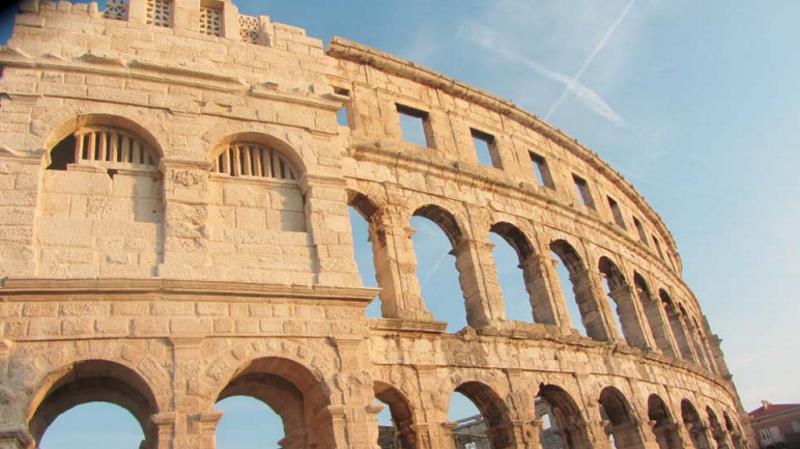 The Roman writer Pliny mentions Pula in the 1st century under the name Colonia Pietas Iulia Pola, while an inscription from the 2nd/3rd century calls Pula Colonia Iulia Pola Pollentia Herculanea. The town's patron was Hercules. The town could house 4000–5000 inhabitants, while the surrounding area consisted of rich agricultural estates. Today Pula is a vibrant modern town, the largest in Istria County, with a metropolitan area and more than 100,000 inhabitants.
The historic core of Trogir has been part of the UNESCO list of cultural heritage since 1977, and is located on a small island between the mainland and the island of Čiovo. Trogir was founded by Greek colonists, traders from the island of Vis, in the 3rd century BC, and is an extraordinary example of urban continuity. The orthogonal layout of its streets dates back to the Hellenistic period, and successive rulers continued to adorn it with outstanding public and residential buildings and fortifications. The most significant building in Trogir is the cathedral with the portal of the west doors, a masterpiece by the master Radovan, the most important example of Romanesque-Gothic art in Croatia. In Trogir's historic core, within houses near the cathedral and the town loggia, the first pharmacy in Europe was opened in 1271.
There are many more interesting details written in the guide, which you can download, and you will experience a town, its history and culture best if you visit it and look around at what interests you.
Given the great interest shown by people, we have no reason to doubt that this guide will be well received, and that new editions with even more material and new details, discovered over time, will be published for years to come.
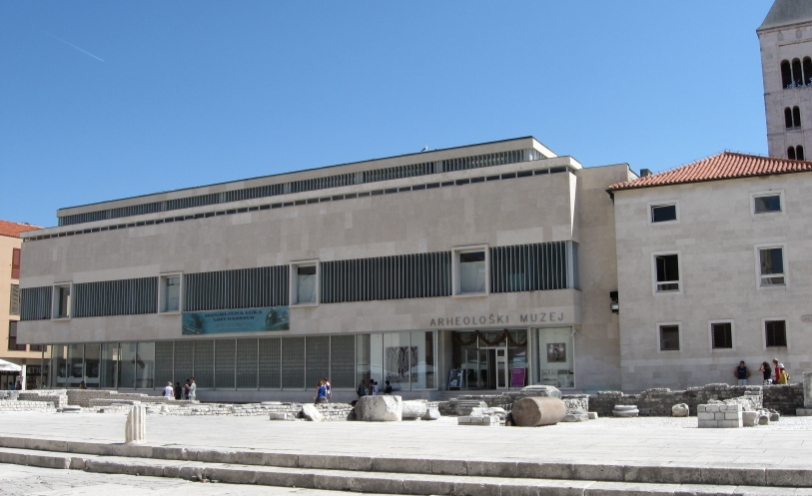
The publication contains a very extensive and rich tourist guide to popular tourist towns in Croatia. In it you will find many interesting facts about towns such as: Poreč, Šibenik, Trogir, Split, Hvar, Dubrovnik and Pula. There are, of course, also descriptions of Brijuni National Park, and Kvarner with its towns and the islands belonging to it.If you have been searching the internet for Rijeka and Krk, Lošinj and Cres, Nin, Zadar, Solin and Vid, as well as Krapina or Zagreb, you can find all of that in the printed edition we mentioned at the beginning of the story.
The publication was issued by the Ministry of Tourism in cooperation with the Archaeological Museum and experts. It is very informative and reveals, in a special way, the historical and cultural truths of Croatian towns and nearby places.
If you have used search engines in the hope of finding all the details about the aforementioned towns and the places belonging to them, this guide might be just right for you. Find out first-hand what you can see in Rijeka, on the island of Krk, or in Poreč. Explore Šibenik, Trogir and Split, and of course other towns rich in history.
What Can You Find in the Guide?
This is a guide containing the TOP 20 archaeological destinations in Croatia. On more than 100 pages, it describes interesting locations and location markers with directions on how to reach them, as well as recommendations for events, travel agencies and cultural institutions in those places.
The guide was printed in 1000 copies in Croatian and English, but it can also be downloaded as a finished document from this link.
The aim of this publication is to attract tourists interested in cultural and historical offerings. According to the data available when the publication was being prepared, such tourists make up half of all tourists in the world.
The purpose of the guide is to point out the best archaeological sites open to tourists. It was made in such a way that, with the help of available data, it was explored what our guests are most interested in, what they ask about and what they would like to visit. With that in mind, the sites were chosen that can best represent the history of Croatia as well as the culture of our beautiful homeland. The aim is also to highlight the richness of the archaeological heritage and to interest visitors in further exploration.
The publication of the guide was prompted by the fact that archaeological tourism is gaining importance in the world, and tourists interested in this topic like to visit Mediterranean countries. This is supported by data showing that Italy's archaeological attractions and museums are visited by 38 million tourists a year, Greece's by 14 million, and Turkey's by 10 million guests.
Croatia is visited by no fewer than 5 million tourists, but the aim is to increase that number. With the goal of increasing the number of guests, we want to bring the quality of the offer up to an enviable level. Besides the many who decide to come to swim and sunbathe on the beautiful beaches, Croatia is visited by a very large number of guests who want to learn about the history of the place where they are staying and see its cultural landmarks.
Which Locations in Croatia?
If we are writing about historical monuments and cultural heritage, then some of them should certainly be mentioned.
Zadar Forum
It is located in front of the Church of St Donatus and the Archbishop's Palace. This is the largest Roman forumon the eastern side of the Adriatic, and also the best preserved in Croatia. It was founded by Emperor Augustus, mentioned in an inscription as Parens coloniae. It represents a highly developed example of a forum complex, and is one of the most important among the ancient Adriatic towns. An inscription bearing the name of Augustus's proconsul for Illyricum, Tamphilus Vala, carved on the Forum's well, testifies that construction of the complex began as early as the second decade of the 1st century BC, with its final appearance achieved through reconstruction in the 3rd century AD.
Salona in Solin
Salona is known as the centre of ancient Dalmatia, and is located about 6 km from Split, in present-day Solin. As the capital of the Roman province of Dalmatia, Salona was originally a port of the Illyrian Delmatae, which the Romans conquered towards the end of the 2nd century BC. You can find out more interesting details if you read the guide, or if you visit Solin.
The Rich History of Pula
The first hilltop settlement in the area of present-day Pula arose 3000 years ago. Historical records mention the town of Pula as early as the 1st century BC. Under Roman rule, Pula experienced great growth. Pula is the largest and most significant town of Istria in antiquity, founded in 46–45 BC, during the dictatorship of Caesar, on the site of an older Histrian hilltop settlement.
The Roman writer Pliny mentions Pula in the 1st century under the name Colonia Pietas Iulia Pola, while an inscription from the 2nd/3rd century calls Pula Colonia Iulia Pola Pollentia Herculanea. The town's patron was Hercules. The town could house 4000–5000 inhabitants, while the surrounding area consisted of rich agricultural estates. Today Pula is a vibrant modern town, the largest in Istria County, with a metropolitan area and more than 100,000 inhabitants.Trogir and the Town's Landmarks
The historic core of Trogir has been part of the UNESCO list of cultural heritage since 1977, and is located on a small island between the mainland and the island of Čiovo. Trogir was founded by Greek colonists, traders from the island of Vis, in the 3rd century BC, and is an extraordinary example of urban continuity. The orthogonal layout of its streets dates back to the Hellenistic period, and successive rulers continued to adorn it with outstanding public and residential buildings and fortifications. The most significant building in Trogir is the cathedral with the portal of the west doors, a masterpiece by the master Radovan, the most important example of Romanesque-Gothic art in Croatia. In Trogir's historic core, within houses near the cathedral and the town loggia, the first pharmacy in Europe was opened in 1271.
There are many more interesting details written in the guide, which you can download, and you will experience a town, its history and culture best if you visit it and look around at what interests you.
Given the great interest shown by people, we have no reason to doubt that this guide will be well received, and that new editions with even more material and new details, discovered over time, will be published for years to come.
Private accommodation in Croatia – directly from the owners
Search accommodation in Croatia →Follow us on Facebook for more articles about Croatia. Share this article using the buttons on the right. Thank you!

Upgrade this article
Bio si na ovom mjestu? Podijeli s nama svoja iskustva ili fotografije.
Napiši svoju verziju članka. Nagrađujemo vlasnike apartmana.