

East of the centre of Split, on a hill called Gripe, rises a Baroque fortress from the mid-17th century. Because of its star-shaped plan and its position above the city, it is of interest to anyone who wants to understand how Split once defended itself against the Ottoman threat.
The idea of a fortress was put forward in 1625 by the Hvar military engineer Nikola Kandido, and the design was made in 1647 by the Venetian engineer Alessandro Magli, who also began construction. Most of the walls were built in 1657 under General Camillo Gonzaga, and the works were completed in 1660. The structure was conceived as a self-contained fortress with four polygonal bastions. The north-western bastion was left unfinished, and the main entrance was made in its place. By type it belongs to the most modern fortification system of the time, closest to the new Italian school. Under Austrian rule, two barracks, a powder magazine and a cannon store were built inside the walls. Today these buildings house the State Archives in Split, the Croatian Maritime Museum and the Academy of Arts. The complex also includes the Church of St Anthony of Padua from 1682.
Gripe Fortress is a protected cultural property and is entered in the Register of Cultural Goods of the Republic of Croatia under the code Z-6183.
Photo: Kaiser87, CC BY-SA 3.0, Wikimedia Commons.
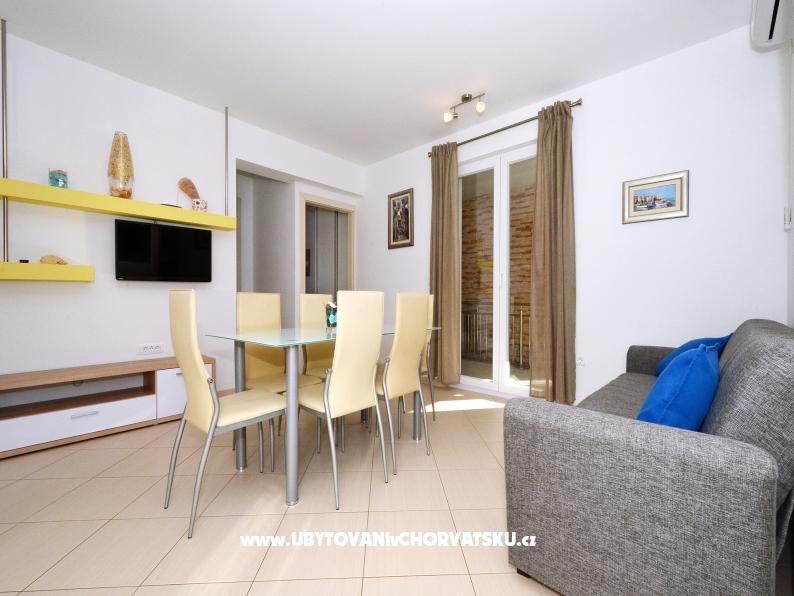
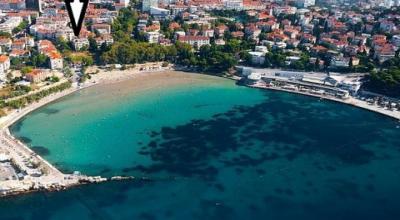
Data: Register of Cultural Goods of the Republic of Croatia (Ministry of Culture and Media), Open Licence; coordinates: Wikidata (CC0). Ivona ApartmentsSplitCapacity: 6 · To the sea: 50 mView offer
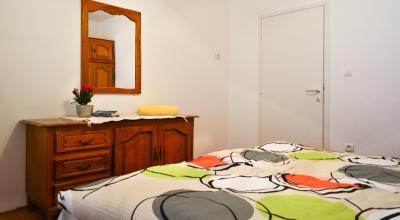
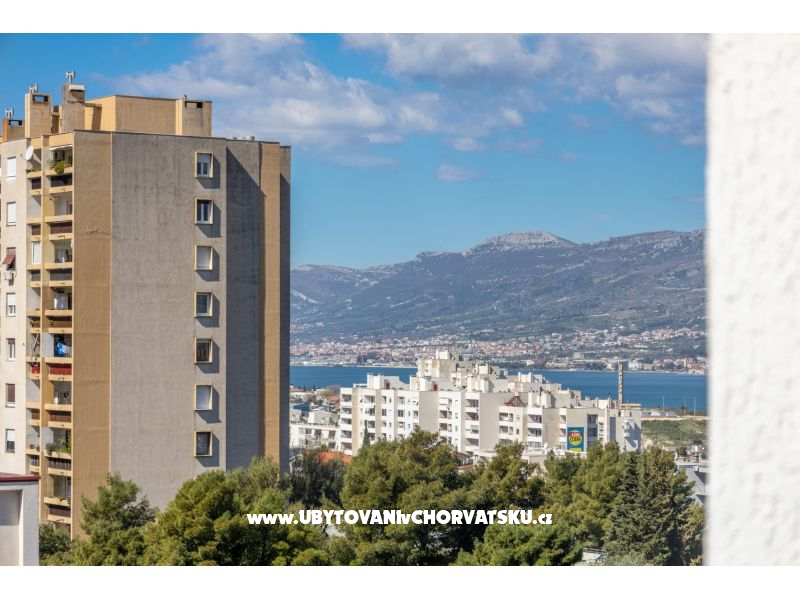 Apartman PujankeSplitCapacity: 2-5 · To the sea: 1 kmView offer
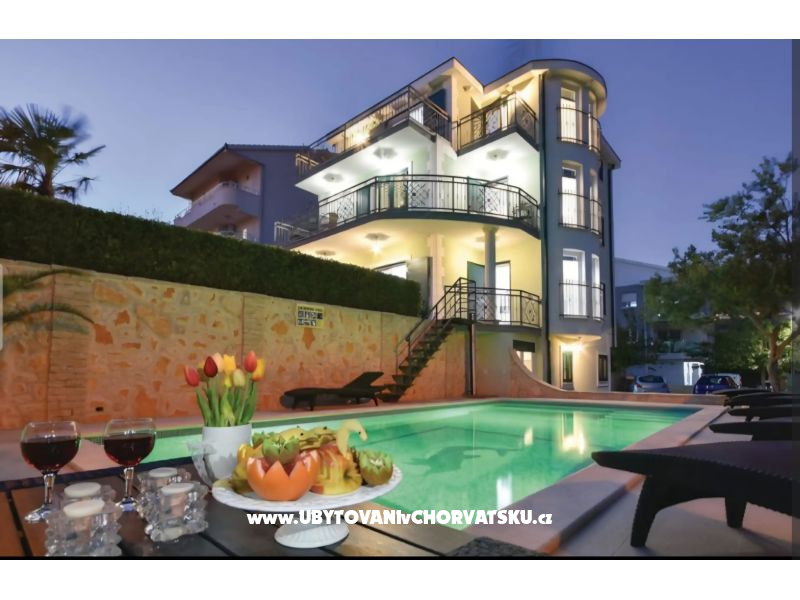 Green paradise villaSplitCapacity: 4-11 · To the sea: 1 kmView offer
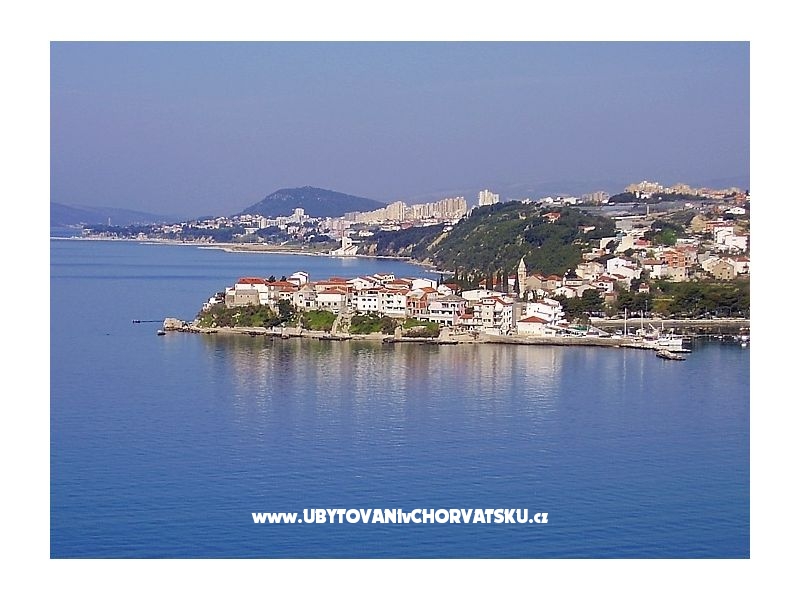 Apartman JagodaSplitCapacity: 2-4 · To the sea: 20 mfrom 25 € per person / nightView offer
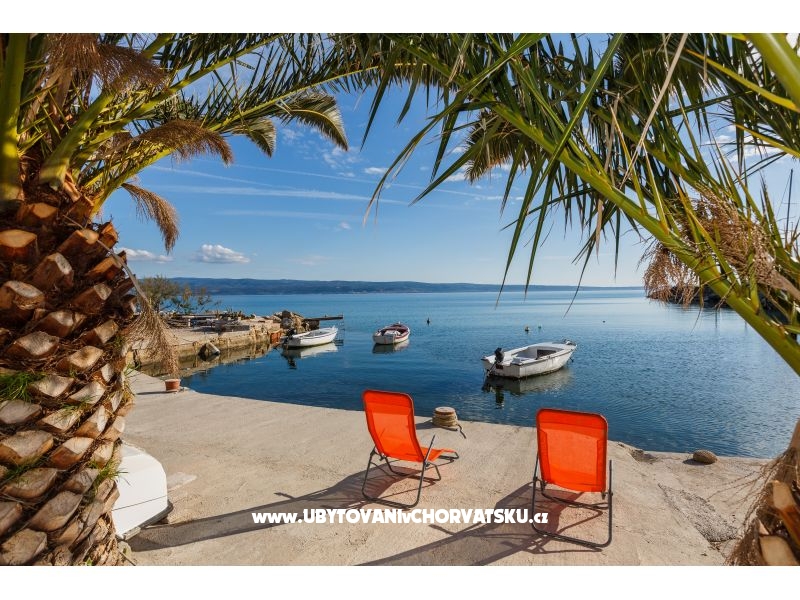 Apartman JadroSplitCapacity: 2-4 · To the sea: 5 mfrom 15 € per person / nightView offer
 Lobster ApartmentsSplitCapacity: 3-23 · To the sea: 400 mfrom 20 € per person / nightView offer
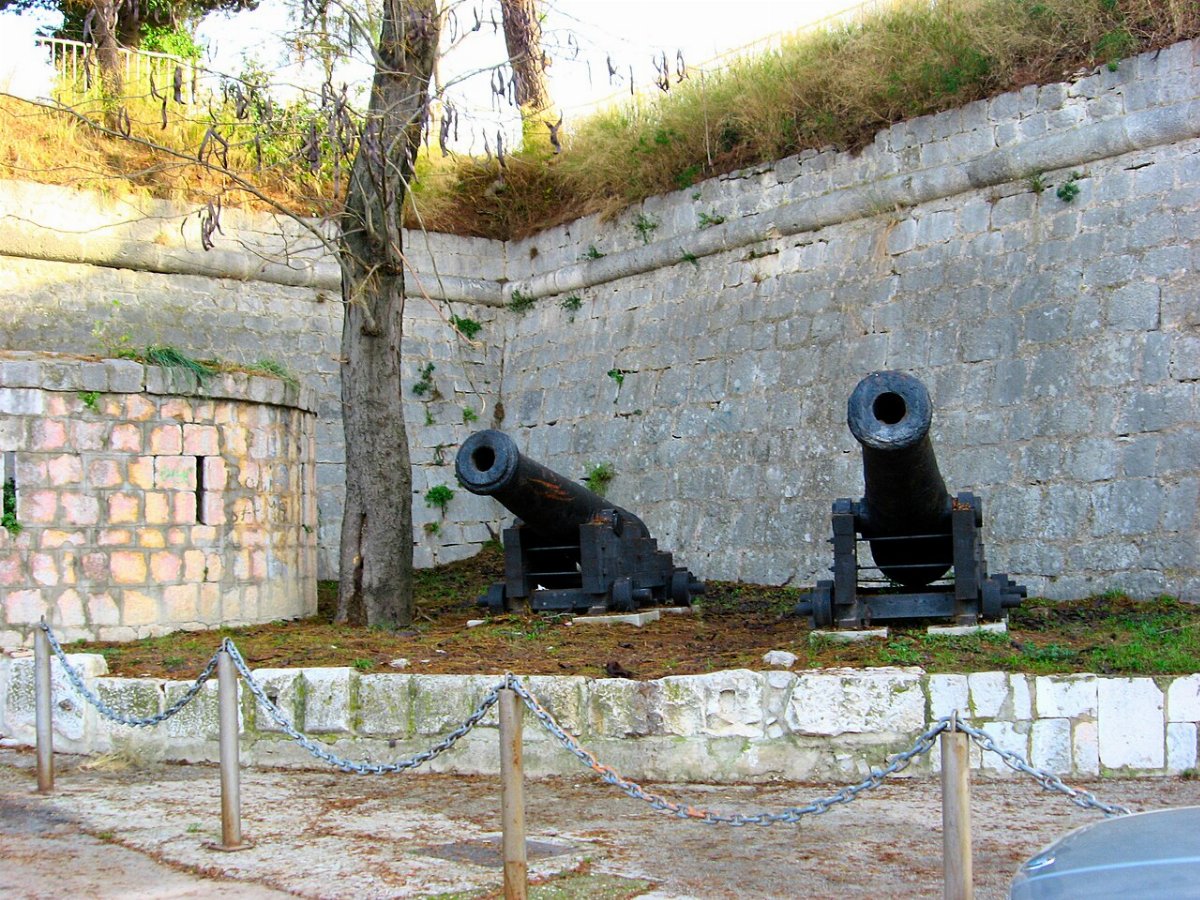
The idea of a fortress was put forward in 1625 by the Hvar military engineer Nikola Kandido, and the design was made in 1647 by the Venetian engineer Alessandro Magli, who also began construction. Most of the walls were built in 1657 under General Camillo Gonzaga, and the works were completed in 1660. The structure was conceived as a self-contained fortress with four polygonal bastions. The north-western bastion was left unfinished, and the main entrance was made in its place. By type it belongs to the most modern fortification system of the time, closest to the new Italian school. Under Austrian rule, two barracks, a powder magazine and a cannon store were built inside the walls. Today these buildings house the State Archives in Split, the Croatian Maritime Museum and the Academy of Arts. The complex also includes the Church of St Anthony of Padua from 1682.
Gripe Fortress is a protected cultural property and is entered in the Register of Cultural Goods of the Republic of Croatia under the code Z-6183.
Photo: Kaiser87, CC BY-SA 3.0, Wikimedia Commons.
Data: Register of Cultural Goods of the Republic of Croatia (Ministry of Culture and Media), Open Licence; coordinates: Wikidata (CC0).
Private accommodation in Split – directly from the owners
All accommodation in Split →Ivona ApartmentsSplitCapacity: 6 · To the sea: 50 mView offerApartman PujankeSplitCapacity: 2-5 · To the sea: 1 kmView offerGreen paradise villaSplitCapacity: 4-11 · To the sea: 1 kmView offerApartman JagodaSplitCapacity: 2-4 · To the sea: 20 mfrom 25 € per person / nightView offerApartman JadroSplitCapacity: 2-4 · To the sea: 5 mfrom 15 € per person / nightView offerLobster ApartmentsSplitCapacity: 3-23 · To the sea: 400 mfrom 20 € per person / nightView offerFollow us on Facebook for more articles about Croatia. Share this article using the buttons on the right. Thank you!
Accommodation nearby
Directly from the owners, no commission
Upgrade this article
Bio si na ovom mjestu? Podijeli s nama svoja iskustva ili fotografije.
Napiši svoju verziju članka. Nagrađujemo vlasnike apartmana.